
Metallographic Preparation Principles for Heat-Treated Steels
Accurate microstructural evaluation of alloy steels, aluminum forgings, and heat-treated components requires artifact-free metallographic specimen preparation. Incorrect sectioning or aggressive grinding damages delicate grain boundaries, masking true phase structures.
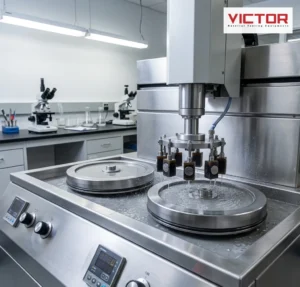
What Are the Four Critical Stages of Metallographic Sample Preparation?
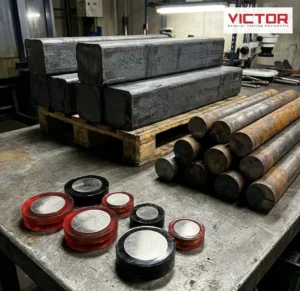
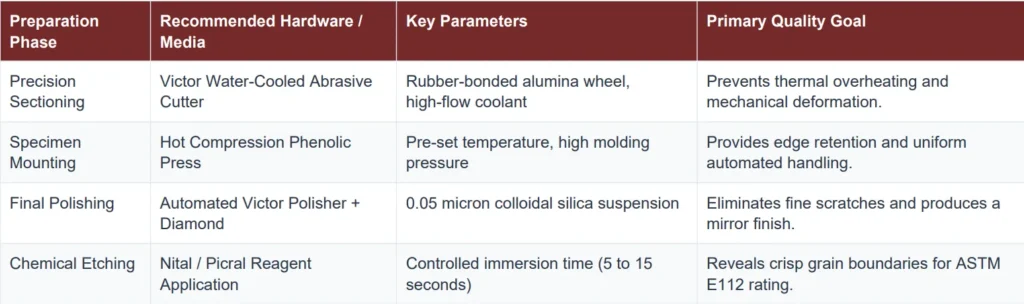
The four critical stages of metallographic sample preparation are precision water-cooled abrasive sectioning, hot compression phenolic mounting, sequential silicon carbide grinding and diamond polishing, and chemical reagent etching.
Sectioning must employ abundant recirculating coolant to prevent thermal overheating and phase transformation.
Phenolic mounting secures delicate edges and provides uniform handling geometry. Mechanical grinding systematically reduces surface deformation using progressively finer silicon carbide papers, followed by sub-micron diamond suspension polishing on high-durability cloths to produce a scratch-free mirror finish.
Why Is Chemical Etching Necessary for Grain Boundary Quantification?
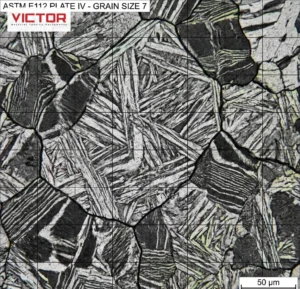
ASTM E112 Standards & Quality Assurance Integration
Evaluating average grain size in accordance with ASTM E112 directly informs mechanical yield strength, impact toughness, and fatigue resistance. Establishing standardized sample preparation workflows backed by Victor testing hardware ensures repeatable, audit-ready microstructural reporting for aerospace, automotive, and heavy forging manufacturers.