
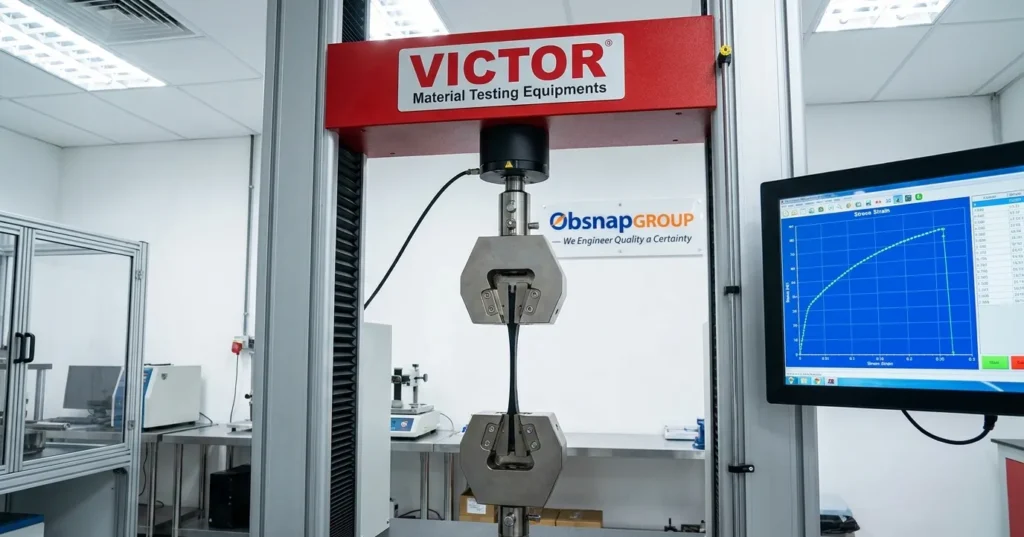
Premature sample tearing, batch-to-batch polymer inconsistency, and unpredictable elongation failures pose continuous challenges
for plant quality managers across Malaysia’s rubber and glove manufacturing sectors. Operating a high-throughput production line
requires absolute confidence that every raw rubber compounding batch meets strict physical tensile limits. Implementing an
accredited Universal Testing Machine for rubber testing ensures total mechanical compliance and eliminates costly material scrap.
What Is a Universal Testing Machine (UTM) in Polymer Quality Control?
A Universal Testing Machine (UTM) is an electro-mechanical or hydraulic test system engineered to measure the tensile
strength, elongation percentage, and compression resistance of raw materials and finished elastomeric components.
By pulling a standardized rubber specimen until break, the machine captures real-time load, displacement, and stress-strain metrics
across the entire deformation curve.
Why Is Tensile Elongation Testing Essential for Rubber and Glove Manufacturers?
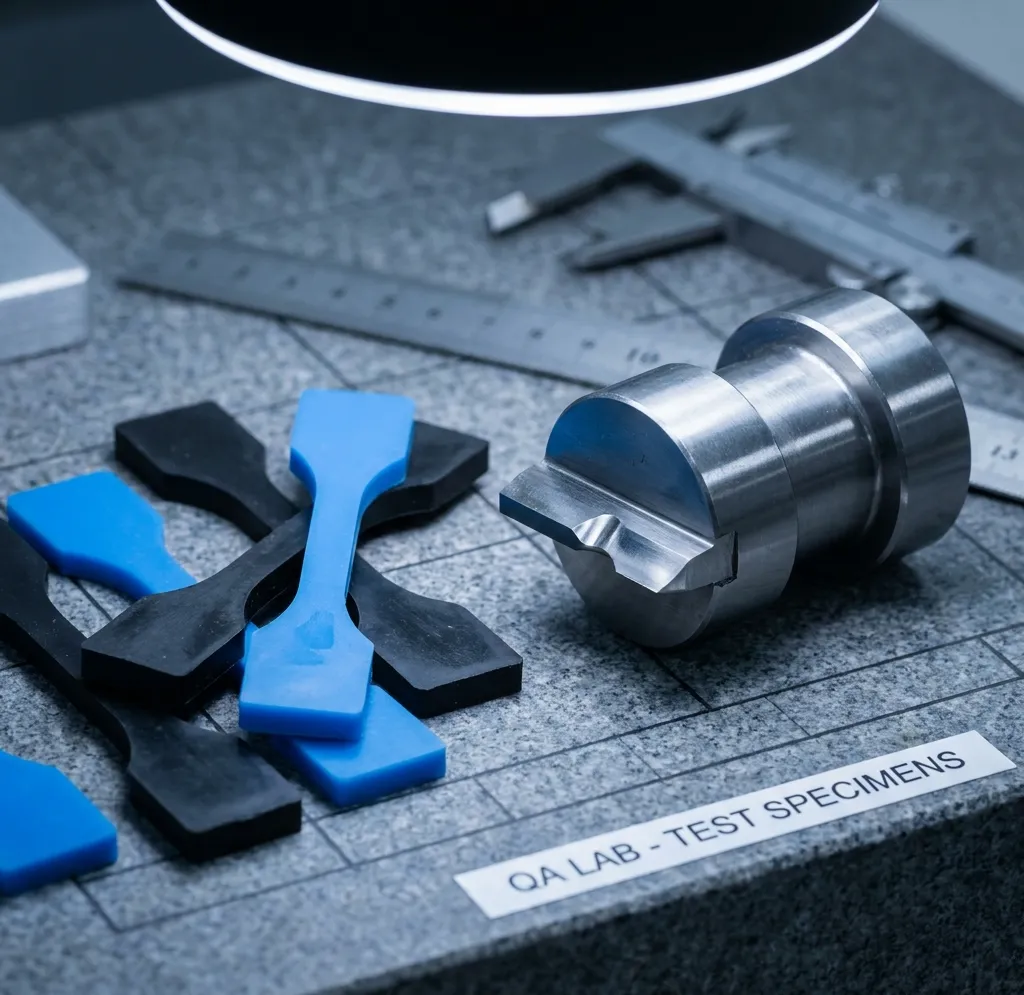
Tensile elongation testing is essential for rubber and glove manufacturers because it quantifies a polymer’s ability to
withstand extreme physical stretching without tearing or undergoing premature mechanical failure under operational
stress.
In elastomeric production, tensile properties serve as the ultimate indicator of compounding quality, cross-linking density, and
vulcanization efficiency.
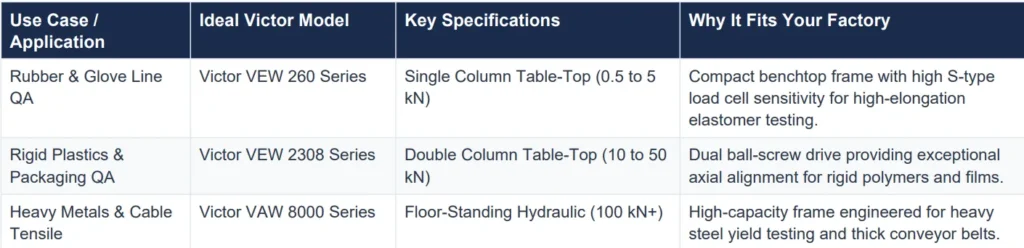
Which Victor Universal Testing Machine Is Best for You?
Frequently Asked Questions (FAQ)
Q: How does ASTM D412 differ from ASTM D624 in elastomer testing?
ASTM D412 evaluates tensile stress, tensile strength, yield point, and ultimate elongation of vulcanized rubber, whereas ASTM D624 measures resistance to tear initiation and propagation.
Q: Why do rubber samples slip during tensile testing and how do pneumatic grips solve this?
Rubber samples slip in manual grips because elastomeric materials experience drastic lateral thinning under high strain. Pneumatic wedge grips maintain constant air pressure, automatically clamping tighter as the sample cross-section shrinks.