Introduction to Industrial Metrology: Why Measurement Matters in Manufacturing
Modern manufacturing is built on the expectation that components will function reliably under demanding operational conditions. From semiconductor devices inside digital systems to precision mechanical assemblies in industrial equipment, product performance depends heavily on how accurately design specifications are translated into physical reality.
To maintain dimensional accuracy throughout production, industrial metrology systems are integrated directly into manufacturing workflows. Industrial metrology refers to the application of precise measurement techniques to ensure that manufactured components meet defined dimensional and geometric specifications.
Measurement tools and methods are used to verify tolerances, validate engineering designs, and maintain consistency across production batches. In manufacturing environments, critical product characteristics such as length, diameter, thickness, flatness, roundness, and geometric alignment must be controlled within acceptable limits. Without reliable measurement systems, product specifications cannot be verified, and quality assurance becomes difficult to maintain.
Industrial Metrology in Manufacturing Quality Control
The role of industrial metrology can be understood through several key functions in manufacturing quality control:
1. Quality Assurance
Measurement ensures that parts conform to design specifications. By verifying dimensional accuracy, manufacturers can detect deviations early and prevent defective products from reaching customers.
2. Process Control
Metrology is not limited to final inspection. It plays a vital role in monitoring production processes, identifying trends, and supporting Statistical Process Control (SPC). By measuring continuously and systematically, manufacturers can correct variations before they escalate into large-scale defects.
3. Cost Reduction and Efficiency
Inaccurate measurement leads to scrap, rework, production delays, and warranty claims. Precise and repeatable measurement systems reduce waste, improve first-pass yield, and enhance overall production efficiency.
Key Technologies in Industrial Metrology
Industrial metrology encompasses a wide range of inspection technologies, including:
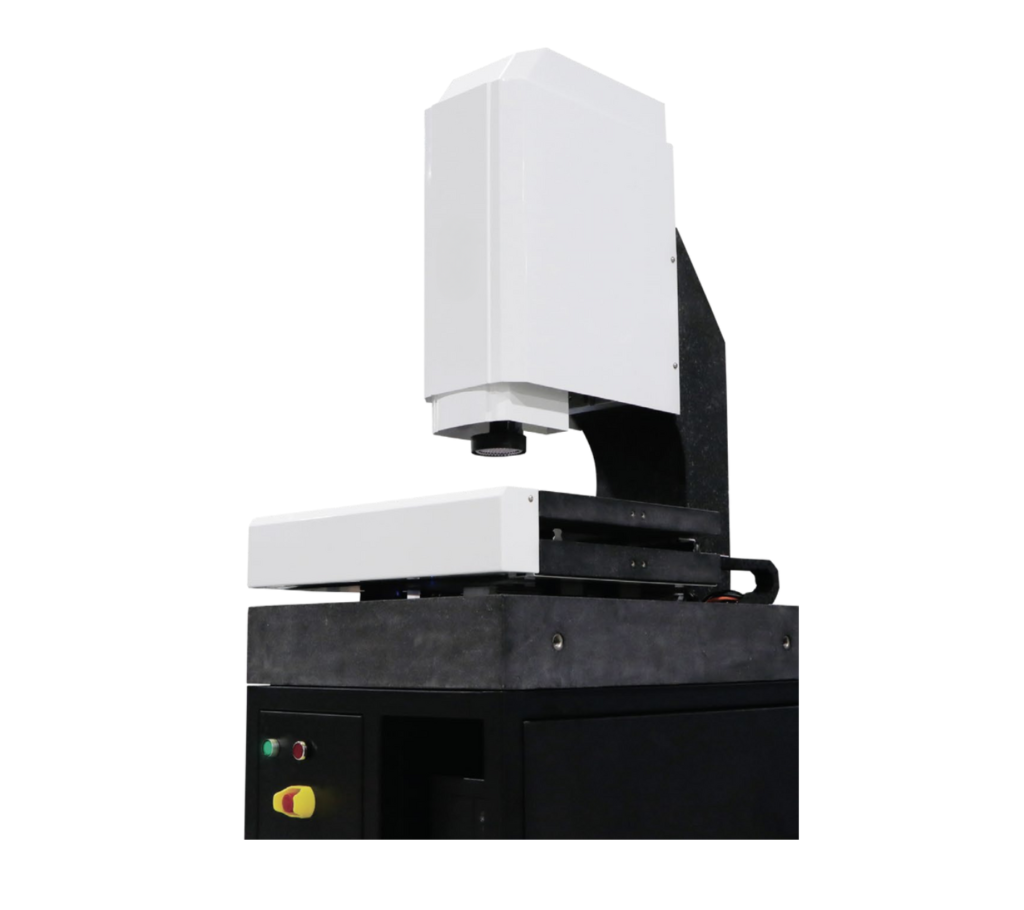
Video Measurement Systems (VMS) are non-contact optical inspection systems primarily used for high-speed, two-dimensional (2D) dimensional measurement. By combining precision motion stages, telecentric optics, and image-processing software, VMS automatically detect edges and calculate dimensional features with high repeatability.
Because measurement is performed optically rather than through physical contact, VMS are well suited for small, delicate, or precision components where mechanical probing may introduce error or surface damage. Their integration into production lines supports rapid inspection and consistent measurement across batches.
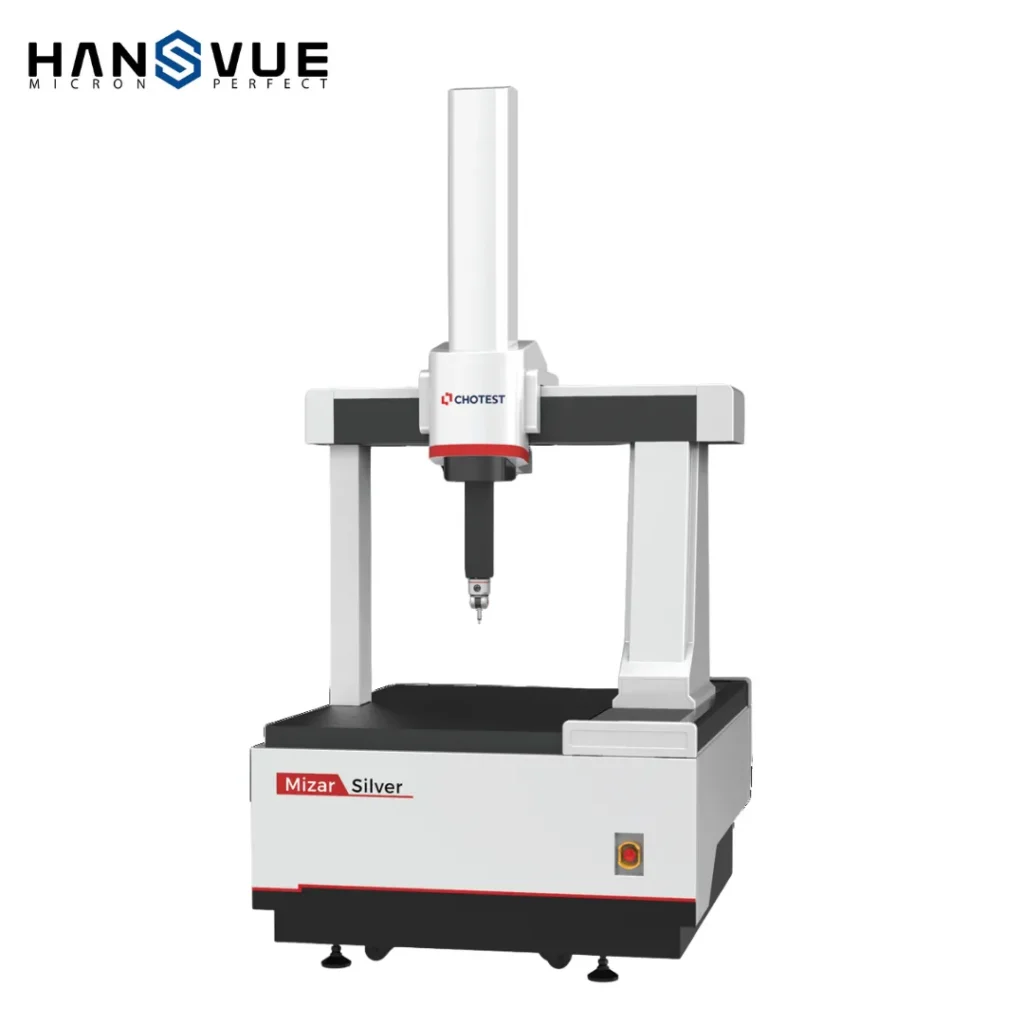
Coordinate Measuring Machines (CMM) provide highly precise three-dimensional (3D) dimensional analysis. Using touch probes or scanning sensors, CMMs capture coordinate data points across a component’s surface to reconstruct its geometric profile.
CMMs are widely used for verifying complex geometries, tight tolerances, and full 3D features such as form, position, and alignment. Although typically slower than optical systems, they offer comprehensive geometric validation critical in industries such as aerospace, automotive, and precision tooling.
Nimbus Series – Fully Auto Video Measuring System (VMS) for Precision Inspection
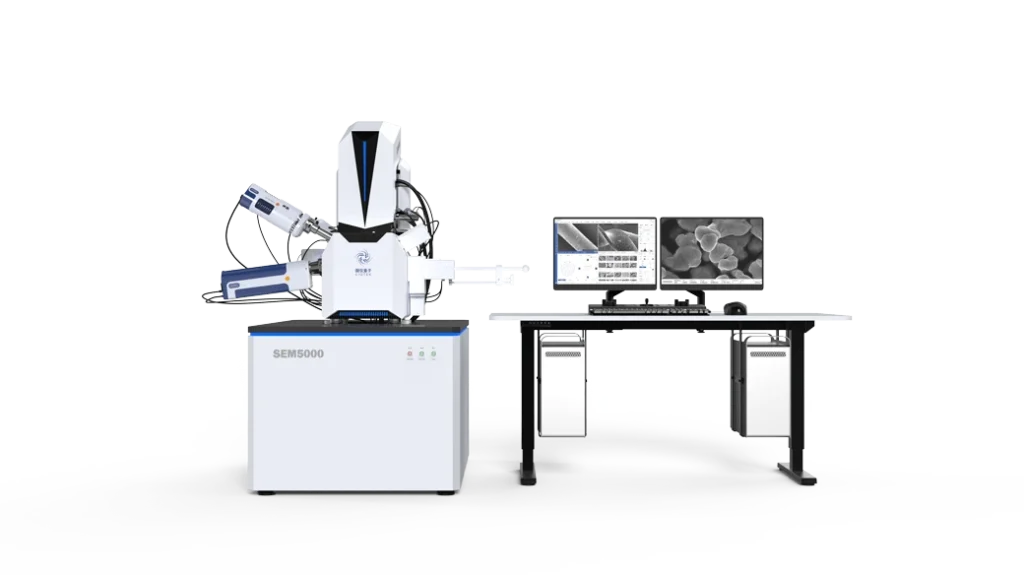
Scanning Electron Microscopy (SEM) is an advanced imaging technology that uses a focused electron beam to examine material surfaces at extremely high magnification. While not a conventional production-floor measurement tool, SEM plays an important role in failure analysis, material characterization, and microstructural inspection.
In manufacturing contexts such as semiconductors and advanced materials, SEM enables detailed examination of surface defects, micro-cracks, and structural irregularities that are beyond the resolution limits of optical systems.
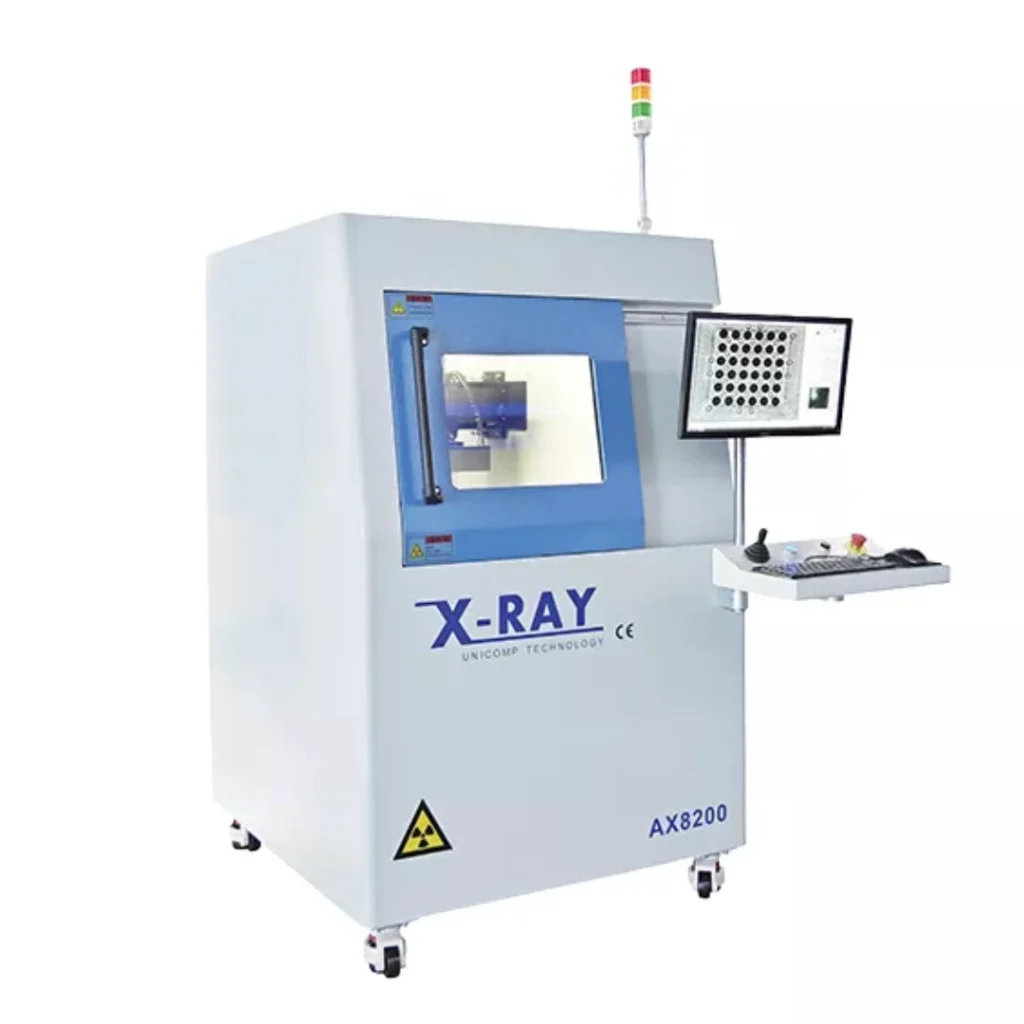
X-ray Inspection Systems extend measurement capability beyond visible surface dimensions by enabling non-destructive evaluation of internal structures. Unlike surface-based measurement methods, X-ray technology allows manufacturers to inspect the internal integrity of components without sectioning or damaging them.
X-ray inspection is particularly valuable for detecting hidden defects such as voids, inclusions, cracks, porosity, and assembly misalignments. In industries where internal structural reliability is critical — including electronics, die casting, and medical device manufacturing — X-ray systems provide essential verification while preserving the component for use.
SEM 5000 (Field Emission Scanning Electron Microscope)
As manufacturing technologies continue to advance toward higher precision and automation, industrial metrology will remain a fundamental component of quality assurance systems. By providing reliable measurement data, metrology supports product performance, process stability, and industrial competitiveness.