The Application of Coordinate Measurement Machine (CMM) in Additive Manufacturing (3D Printing)
Additive manufacturing, commonly known as 3D printing, is a manufacturing process that creates components layer by layer from digital 3D models. While often associated with plastic prototype printing, modern additive manufacturing is also widely used in industries such as aerospace, automotive, and medical manufacturing to produce complex metal and polymer components.
In aerospace applications, additive manufacturing is used to produce lightweight components and complex geometries that help improve fuel efficiency and performance. In the medical industry, the technology supports the production of customized implants, prosthetics, and dental components tailored to individual patient requirements. Automotive manufacturers also utilize additive manufacturing for rapid prototyping, tooling, and the production of specialized components.
Compared to conventional manufacturing methods, additive manufacturing offers greater design flexibility and the ability to produce highly complex geometries that may be difficult or impossible to achieve through traditional machining processes. However, despite these advantages, dimensional accuracy and quality verification remain critical requirements in industrial manufacturing.
To ensure that manufactured components meet design specifications and tolerance requirements, Coordinate Measurement Machines (CMMs) are widely used for dimensional inspection and quality control. CMMs help manufacturers verify the accuracy of additive manufactured parts while supporting consistency, reliability, and compliance with industry standards.
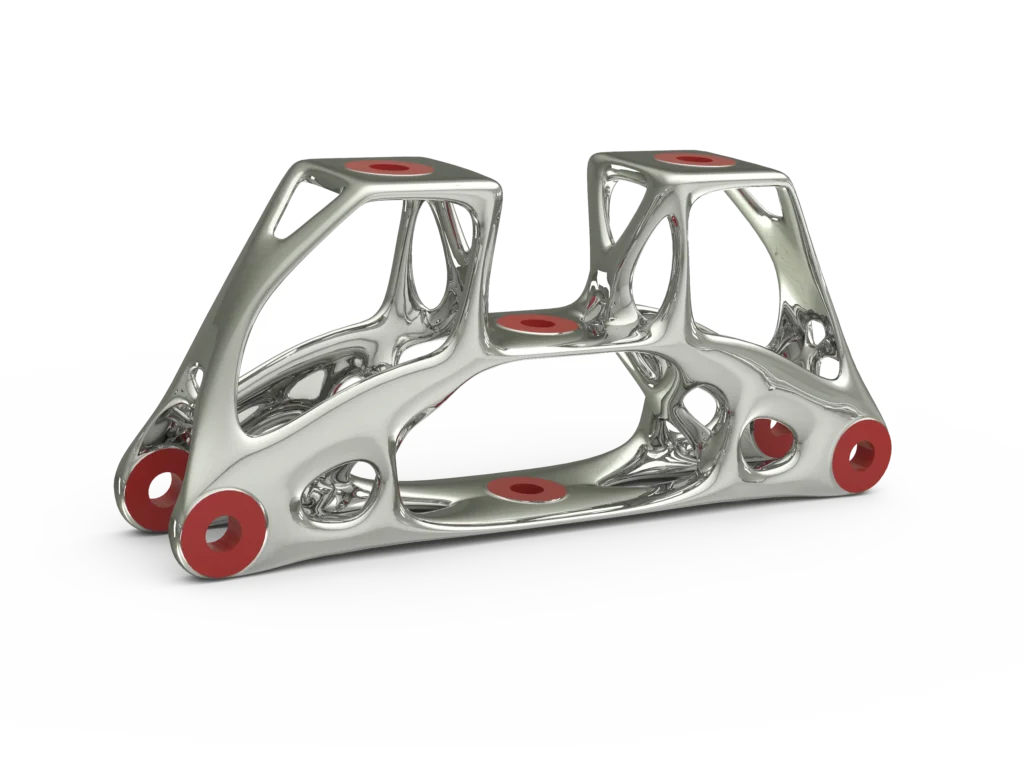
Additive manufacturing in aerospace (from Siemens)
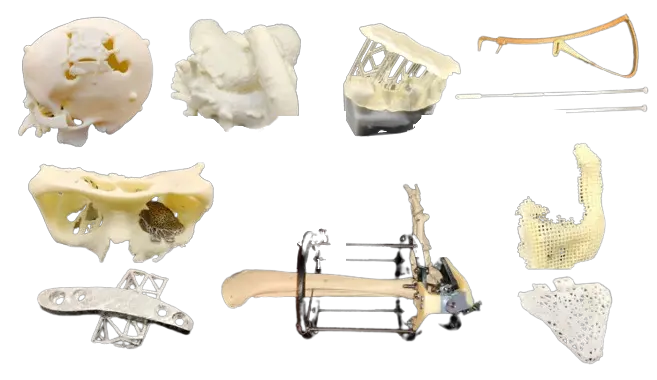
Additive manufacturing in medical industry (from NIH)
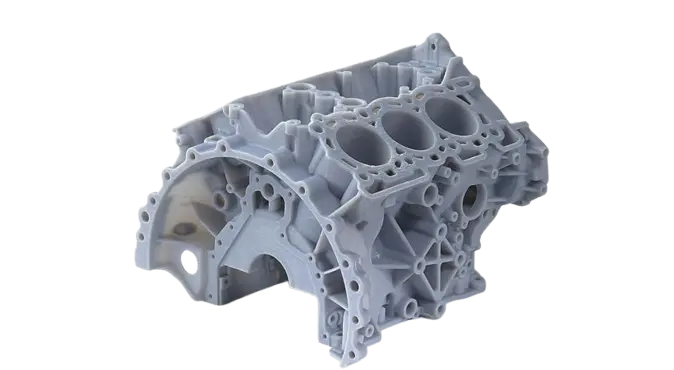
Additive manufacturing in automotive (from Runsom Precision)
A Coordinate Measurement Machine (CMM) is a precision metrology system used to measure the physical geometry of a component. CMMsoperate by collecting coordinate points from a workpiece using a touch probe or scanning system to determine dimensions, geometric tolerances, and surface features with high accuracy.
Coordinate Measurement Machines (CMMs) are commonly used in manufacturing industries for inspection, quality assurance, reverse engineering, and first article inspection applications. Due to their high measurement precision, CMMsare especially valuable in applications where tight tolerances and dimensional consistency are required.
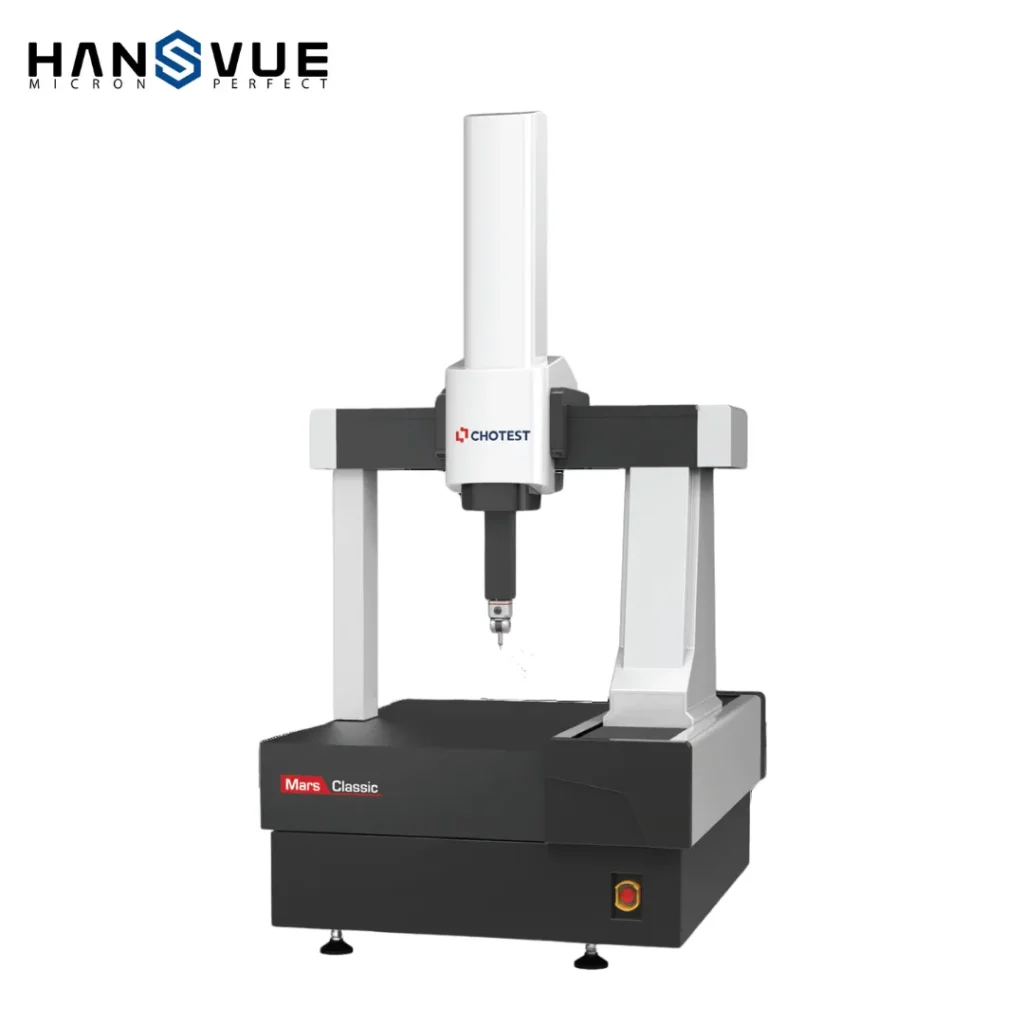
Mars Classic Small Moving-Bridge CMM
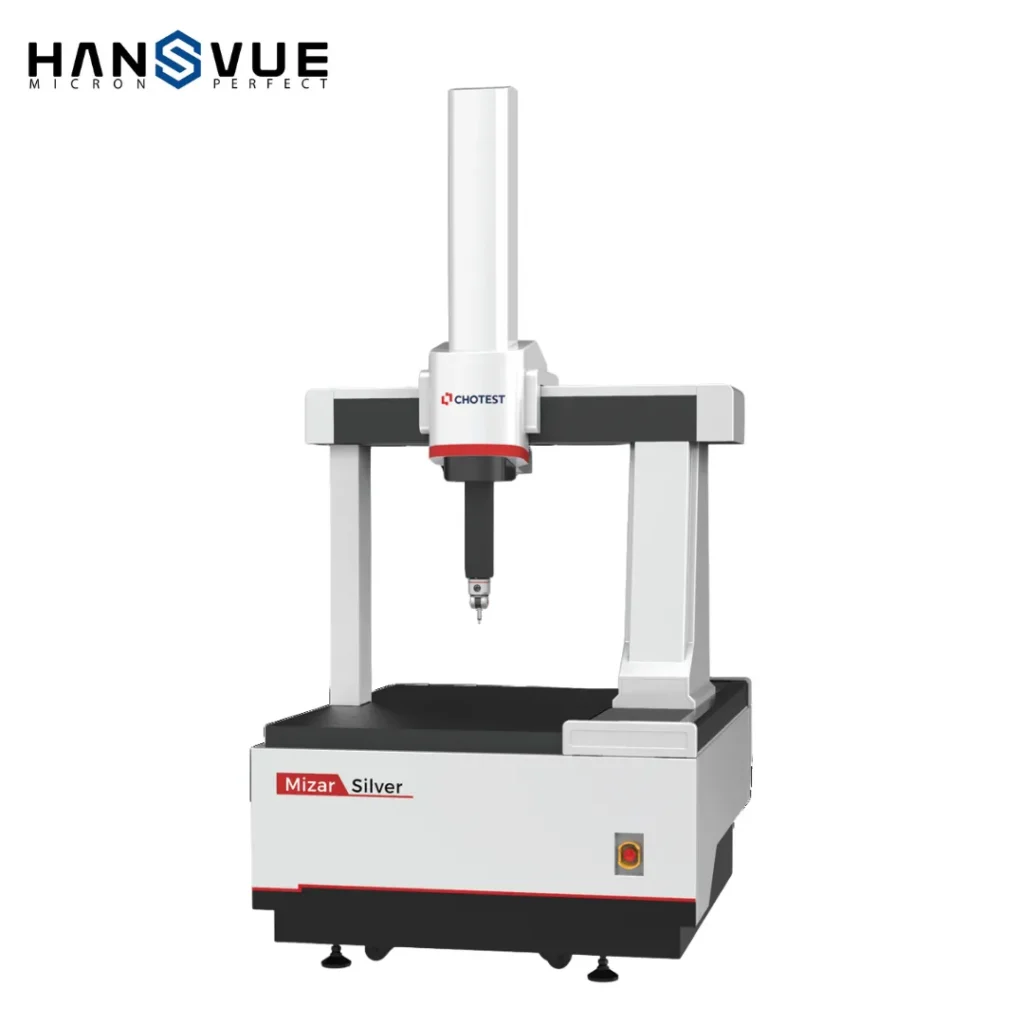
Mizar Silver Small Moving-Bridge CMM
The Importance of Inspection in Additive Manufacturing
Although additive manufacturing provides significant advantages in design freedom and material optimization, the manufacturing process may still introduce dimensional variations and surface inconsistencies.
Factors such as thermal distortion, shrinkage, layer misalignment, and post-processing operations can affect the final dimensions of a printed component. In metal additive manufacturing, residual stresses generated during the printing process may also contribute to deformation or warping.
Additionally, additive manufactured components often contain highly complex geometries, curved surfaces, and internal structures that require precise dimensional verification to ensure proper functionality.
As a result, reliable inspection methods are necessary to confirm that manufactured parts meet required design specifications and quality standards.
Applications of Coordinate Measurement Machine (CMM) in Additive Manufacturing
Coordinate Measuring Machines (CMMs) support various inspection and quality control processes in additive manufacturing. Some common applications of CMMsin additive manufacturing are as follows:
1. Dimensional Verification
One of the primary applications of Coordinate Measurement Machines (CMMs) in additive manufacturing is dimensional inspection. CMMsare used to verify whether printed components conform to their original Computer-Aided Designs (CADs) and specified tolerances.
Critical dimensions such as hole diameters, feature positions, flatness, and profile measurements can be evaluated with high precision.
2. Geometric Dimensioning and Tolerancing (GD&T) Inspection
Coordinate Measurement Machines (CMMs) are also widely used for GD&T inspection. Features such as perpendicularity, concentricity, true position, and profile tolerances can be measured to ensure that additive manufactured components meet engineering drawing requirements.
This is particularly important for precision industries such as aerospace and medical manufacturing.
3. Inspection After Post-Processing
Many additive manufactured components undergo additional processes such as machining, polishing, or heat treatment after printing. Coordinate Measurement Machine (CMM) inspection can be performed after these operations to verify dimensional accuracy and detect any deviations introduced during post-processing.
4. Reverse Engineering
Coordinate Measurement Machines (CMMs) may also support reverse engineering applications by collecting coordinate data from existing components to generate CAD models or compare manufactured parts against original designs.
5. Quality Assurance and Documentation
In industrial manufacturing environments, Coordinate Measurement Machines (CMMs) help support quality assurance processes by generating inspection reports and measurement data for traceability and process validation.
This allows manufacturers to maintain consistent production quality and demonstrate compliance with required standards.
The high dimensional measurement accuracy and repeatability of Coordinate Measurement Machines (CMMs) make them suitable inspection tools for additive manufacturing applications requiring precise dimensional verification and quality assurance.
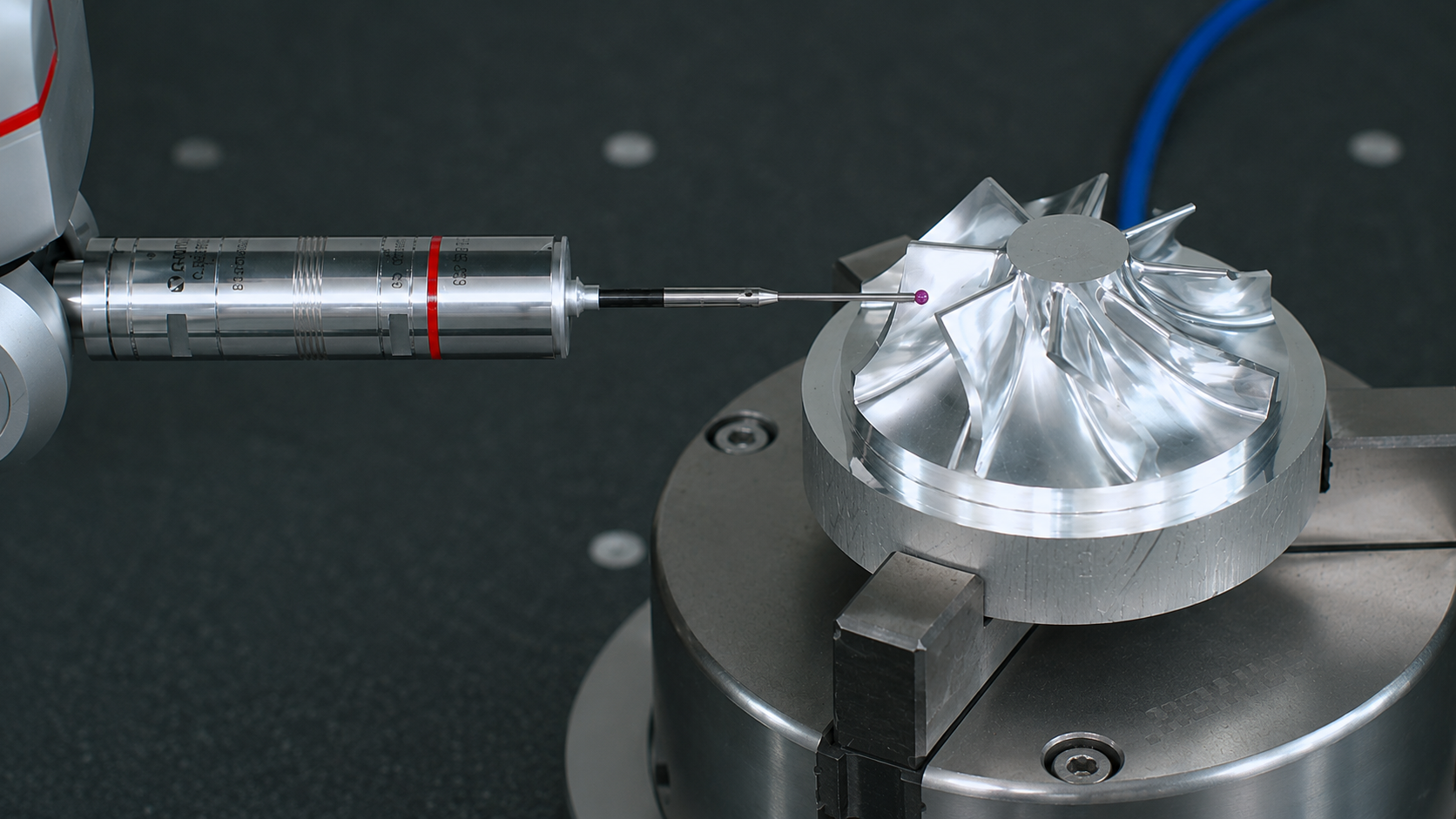
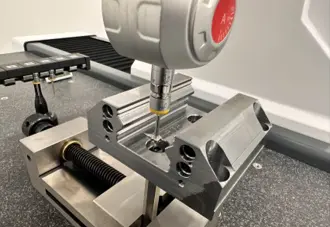
Dimensional verification and inspection by the CMM
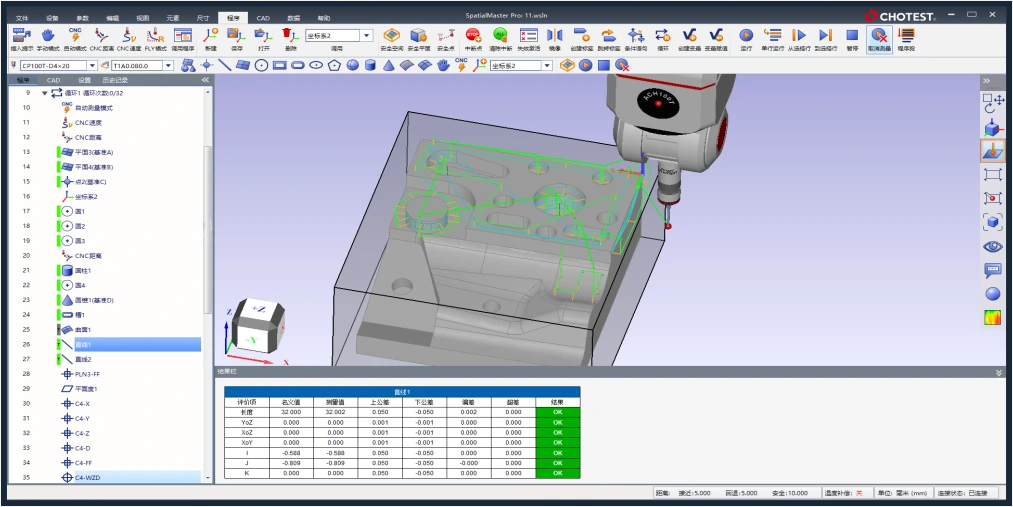
DG&T and reverse engineering by the CMM
The Advantages of Using Coordinate Measurement Machine (CMM) in Additive Manufacturing
These advantages help manufacturers improve confidence in additive manufactured components while maintaining product quality and consistency.
Limitations and Challenges
Despite their advantages, Coordinate Measurement Machines (CMMs)may also face certain challenges when inspecting additive manufactured parts.
Components produced through additive manufacturing may have rough surface finishes that can affect probe contact consistency during measurement. Certain internal geometries, enclosed features, or intricate lattice structures may also be difficult to access using conventional touch probes.
Inspection capability may additionally depend on the feature size of the component. In some cases, internal features that are smaller than the probe tip diameter or probe accessibility range may reduce measurement reliability or prevent accurate probe contact altogether.
In such applications, manufacturers may combine Coordinate Measurement Machine (CMM) inspection with optical measurement systems and X-ray or Computed Tomography (CT) technologies to improve inspection coverage for highly complex parts.
Conclusion
As additive manufacturing continues to expand across modern industries, accurate dimensional inspection remains essential for maintaining product quality and reliability. Coordinate Measurement Machines (CMMs) play an important role in verifying the dimensional accuracy of additive manufactured components while supporting quality assurance and compliance with engineering specifications.
By combining additive manufacturing with precision metrology systems such as CMMs, manufacturers can improve confidence in complex component production and maintain consistent manufacturing standards.