

Selecting measurement equipment for production is not a purchasing exercise—it is a process control decision. Inaccurate or unstable measurement systems lead to false rejects, undetected defects, and unreliable quality data. As production tolerances tighten and compliance requirements increase, the impact of incorrect equipment selection becomes more severe.
This article is written for manufacturing and quality control engineers who are responsible for inspection planning, process capability, and audit readiness. It explains how to select measurement equipment based on production requirements, measurement theory, environment, and long-term reliability, not brochure specifications.
What Is Measurement Equipment in a Production Environment?
Measurement equipment refers to tools and systems used to verify whether a product conforms to defined specifications throughout manufacturing. This includes dimensional measurement, form and position verification, surface evaluation, and material-related inspection.
In production, measurement equipment serves three core functions. First, it verifies product conformity. Second, it supports process control by identifying variation trends. Third, it provides traceable data for audits and customer requirements. Equipment that fails in any of these roles introduces risk into the manufacturing system.
Why Measurement Equipment Selection Matters in Production
In modern manufacturing, quality control is no longer limited to final inspection. Measurement is integrated into process control, SPC analysis, and continuous improvement programs. When measurement equipment is poorly matched to the application, several issues appear quickly.
Measurements become inconsistent between operators or shifts. Inspection cycle time increases and disrupts production flow. Data cannot be trusted for decision-making, which undermines corrective actions. Over time, this leads to higher scrap rates, rework, and audit findings.
Correct equipment selection ensures that measurement supports production instead of becoming a bottleneck.
Start with the Actual Measurement Requirement
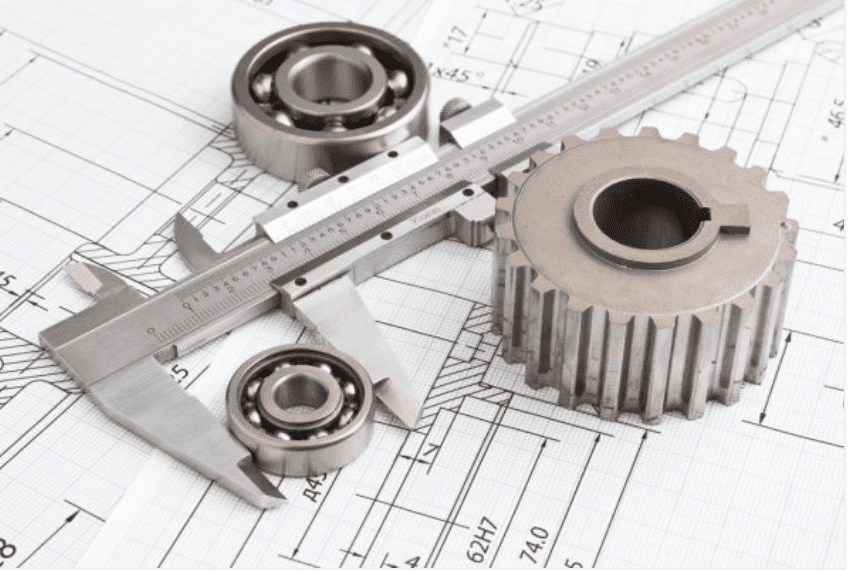
The most common mistake in equipment selection is starting with the instrument instead of the requirement. Before considering technology or brand, engineers must clearly define what needs to be measured and why.
This includes understanding:
The feature being measured, such as size, position, form, or profile
The tolerance range and functional requirement
Whether the measurement is in-process or final inspection
The condition of the part surface and material behavior
Without this clarity, even high-accuracy systems will deliver poor results because they are applied incorrectly.
Match Measurement Accuracy to Process Tolerance
Accuracy should always be evaluated relative to tolerance, not in isolation. Selecting the highest-accuracy system available does not automatically improve quality and often introduces new problems.
Over-specified accuracy increases sensitivity to environmental changes, requires tighter control of temperature and vibration, and increases calibration cost. Under-specified accuracy hides real process variation and leads to unstable quality decisions.
From a production standpoint, the measurement uncertainty must be sufficiently smaller than the tolerance so that decisions are reliable. This principle is fundamental to ISO-based quality systems and should guide all equipment selection decisions.
Consider Production Volume and Inspection Strategy
Measurement equipment must fit into the production workflow. A system that delivers excellent accuracy but slows inspection will eventually be bypassed by operators.
Low-volume or development environments can tolerate longer setup times and flexible measurement routines. In contrast, high-volume production requires fast cycle times, repeatable setups, and minimal operator interaction. In these environments, automation and programmable measurement routines become critical.
Inspection strategy should always be aligned with production demand, not theoretical measurement capability.
Evaluate Environmental Conditions Honestly
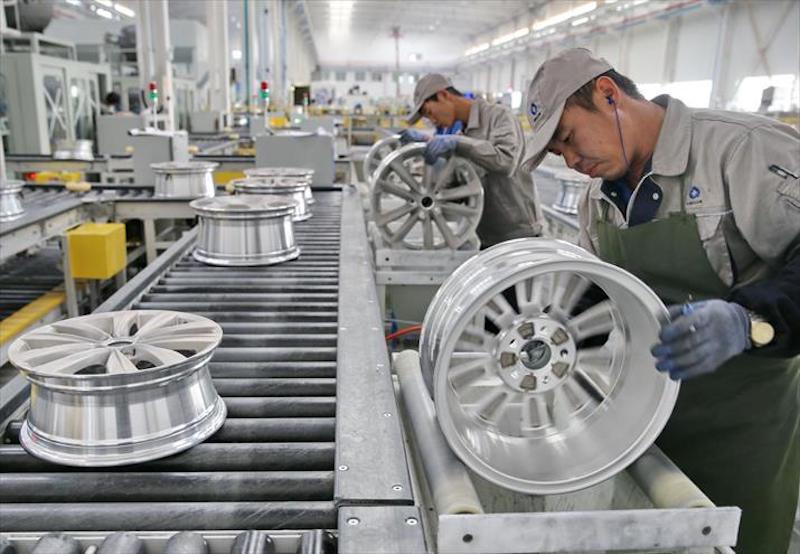
Measurement does not occur in isolation. Temperature variation, vibration, airflow, dust, and oil mist all influence measurement stability. Many measurement systems perform well in controlled laboratory conditions but degrade rapidly on the shop floor.
For production environments, engineers should prioritize mechanical rigidity, thermal stability, and ease of alignment. If laboratory-level accuracy is required on the shop floor, proper environmental control or isolation must be part of the solution. Ignoring this reality leads to inconsistent data and frequent disputes over measurement results.
Understand the Measurement Principle, Not Just the Output
Every measurement system is based on a physical principle. Contact-based systems rely on probing force and surface interaction. Optical systems rely on light, contrast, and edge detection. Each behaves differently under real production conditions.
Engineers must understand how the measurement value is generated, what influences it, and where error sources originate. Without this understanding, troubleshooting measurement variation becomes guesswork, and confidence in inspection results erodes over time.
Standards, Calibration, and Traceability
Measurement equipment must support traceable calibration and verification. This includes clear calibration procedures, defined verification intervals, and alignment with recognized standards such as ISO and ASTM requirements.
Calibration should not be treated as an administrative task. It is part of measurement system performance. Equipment that cannot be verified consistently introduces risk during audits and customer inspections, regardless of its advertised accuracy.
Selecting Equipment Based on Production Use Case
Different production environments require different measurement solutions. Selection should always be driven by use case rather than equipment category.
For example:
Precision machined components often benefit from optical or non-contact systems due to complex geometries.
High-volume production lines require automated or semi-automated systems to maintain throughput.
In-process inspection demands robust equipment that can deliver fast, repeatable checks with minimal setup.
Matching equipment to use case improves both measurement reliability and production efficiency.
Software, Data Handling, and Measurement Integrity
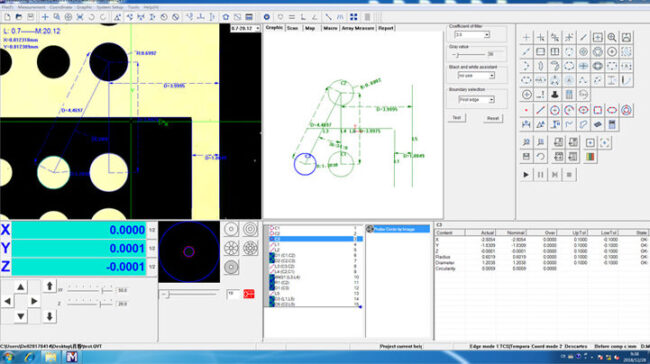
Modern quality control depends on data. Measurement software must deliver consistent evaluation logic, clear tolerance assessment, and reliable data export for SPC and reporting.
If measurement results cannot be traced, reviewed, and analyzed, they cannot support process improvement. Software stability and data integrity are as important as mechanical accuracy in long-term production use.
Common Errors in Measurement Equipment Selection
Several issues appear repeatedly across manufacturing environments. These include selecting equipment solely based on specifications, ignoring environmental impact, underestimating fixturing requirements, and assuming operators will adapt to complex systems without structured workflows.
These mistakes do not appear immediately but gradually degrade measurement reliability, leading to long-term quality problems.
Practical Guidelines Before Final Selection
Before approving any measurement system, engineers should confirm that:
Measurement uncertainty is suitable for the tolerance
The system can operate reliably in the actual production environment
Calibration and service support are available
Operators can achieve consistent results across shifts
Measurement data fits into existing quality systems
If any of these conditions cannot be met, the system will not perform as expected in production.
Conclusion
Measurement equipment is part of the production system, not a standalone tool. Selecting the best measurement equipment requires understanding the process, the environment, and the role measurement plays in quality control.
For manufacturing and QC engineers, the goal is not maximum accuracy on paper, but stable, repeatable, and trustworthy measurement in real production conditions. Equipment that meets this requirement strengthens process control, reduces variation, and supports long-term manufacturing performance.