Maintaining Long-Term Stability and Accuracy in Coordinate Measuring Machines (CMM)
Coordinate Measuring Machines (CMM) are essential tools in quality control, enabling precise measurement of complex components across industries. While these machines are designed to deliver high accuracy, achieving reliable results over time requires more than the machine’s initial performance at installation.
Long-term measurement accuracy is not defined by initial specifications alone, as performance can be influenced by environmental conditions, system wear, and ongoing usage. To ensure consistent and dependable results, organizations must adopt a proactive approach to maintenance, calibration, and operating conditions.
Why Long-Term Stability Matters
In precision measurement, even minor deviations can lead to significant downstream issues. Small inaccuracies may result in product non-conformance, increased scrap rates, and ultimately, customer dissatisfaction. While these errors may appear negligible at first, their impact can accumulate over time, affecting both product quality and operational efficiency.
product non-conformance
increased scrap rates
customer dissatisfaction
Maintaining long-term stability is therefore essential to ensuring reliable measurement results. Consistency across production batches allows manufacturers to uphold quality standards, while reducing the risk of costly errors, rework, and material waste. More importantly, stable measurement systems provide confidence in quality assurance processes, enabling informed decision-making throughout production.
Without proper monitoring and maintenance, gradual performance drift may go unnoticed. These subtle changes can develop over time, only becoming apparent when they begin to affect production outcomes. For this reason, a proactive approach to maintaining stability is critical in preserving both measurement accuracy and overall product quality.
Maintaining long-term accuracy requires an understanding of the factors that can influence Coordinate Measuring Machine (CMM) performance. From environmental conditions to system wear, these elements play a critical role in determining measurement reliability over time.
1. Environmental Conditions
Temperature fluctuations, humidity, vibration, and airflow all play a significant role in measurement accuracy. Even slight thermal expansion or contraction of machine components and workpieces can introduce measurable errors.
2. Mechanical Wear and System Degradation
Coordinate Measuring Machines (CMM) consist of precision components such as guideways, air bearings, and drive mechanisms, all of which may experience gradual wear over time. This wear can lead to reduced positioning accuracy, increased measurement uncertainty, and variations in repeatability.
While these changes are a natural part of machine operation, they must be properly managed to prevent degradation of measurement quality and ensure continued reliability.
3. Probe System Performance
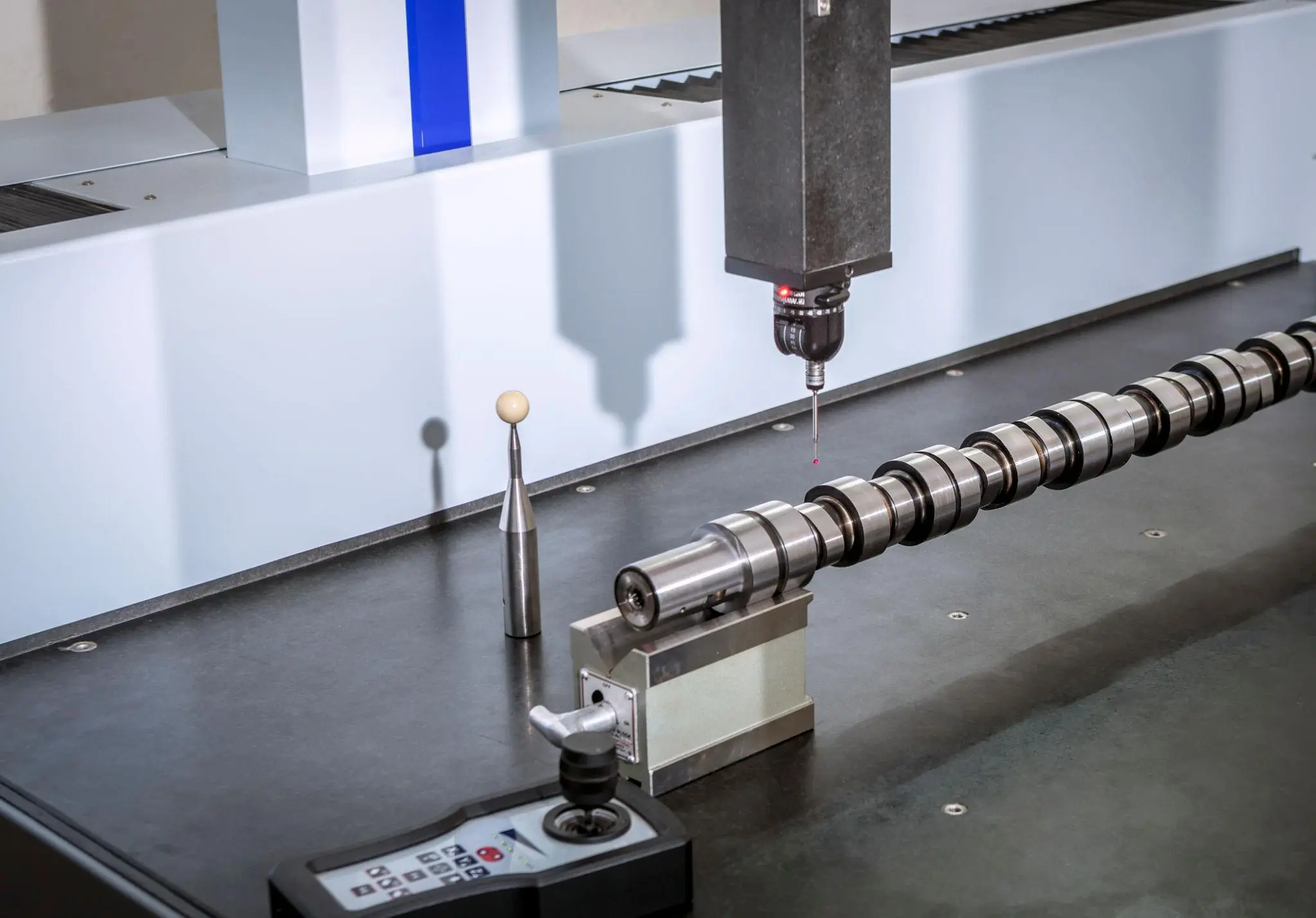
The probe system serves as the critical interface between the Coordinate Measuring Machine (CMM) and the workpiece, making its condition essential to measurement accuracy. Factors such as stylus wear, contamination, or improper qualification can directly affect measurement results.
Routine probe inspection and qualification are therefore necessary to ensure consistent and reliable data capture.
4. Software and Compensation Systems
Coordinate Measuring Machines (CMM) rely heavily on software for measurement routines, error compensation, and data processing. Proper configuration, regular updates, and correct application of compensation algorithms are essential for maintaining system integrity.
Even when the hardware is in good condition, incorrect settings or outdated software can compromise overall measurement accuracy.
Best Practices for Maintaining Accuracy
To achieve long-term stability, organizations should move beyond basic routines and adopt a structured, proactive approach to Coordinate Measuring Machine (CMM) care.
1. Implement Total Preventive Maintenance (TPM)
Rather than relying on reactive repairs, a Total Preventive Maintenance (TPM) approach focuses on preventing issues before they occur. For Coordinate Measuring Machines (CMM), this includes regular inspection of guideways, air bearings, and drive systems, as well as cleaning of scales and critical components to prevent contamination.
Over time, the components of the Coordinate Measuring Machine (CMM) may experience gradual wear. While this is a normal aspect of operation, unmanaged wear can lead to reduced accuracy and system instability. A structured maintenance plan ensures that these issues are identified and addressed early.
2. Perform Regular Calibration and Interim Verification
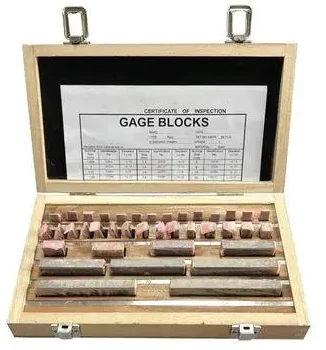
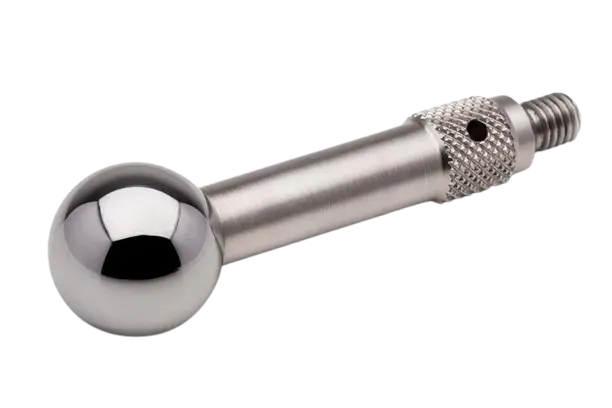
Calibration is essential to ensure that the Coordinate Measuring Machine (CMM) continues to meet its specified accuracy. In addition to scheduled calibration, interim verification using certified artifacts such as gauge blocks or reference spheres provides ongoing confidence in measurement results.
This combined approach helps confirm measurement reliability, detect drift at an early stage, and support compliance with quality standards, ultimately strengthening overall measurement assurance.
gauge blocks
reference sphere
3. Maintain a Controlled Operating Environment
Stable environmental conditions are fundamental to measurement accuracy. Temperature, humidity, and vibration should be maintained within recommended limits to minimize external influences on both the machine and the workpiece.
4. Ensure Proper Operator Training
Even with advanced equipment, improper handling can introduce measurement errors. Well-trained operators help ensure correct probe usage and qualification, as well as consistent measurement techniques.
5. Monitor and Analyze Performance Trends
Tracking the performance of the Coordinate Measuring Machine (CMM) over time enables organizations to detect gradual changes before they become critical. By analyzing measurement data, it becomes possible to identify early signs of drift, detect mechanical or environmental influences, and plan maintenance and recalibration more effectively. This data-driven approach supports predictive maintenance and contributes to long-term system stability.
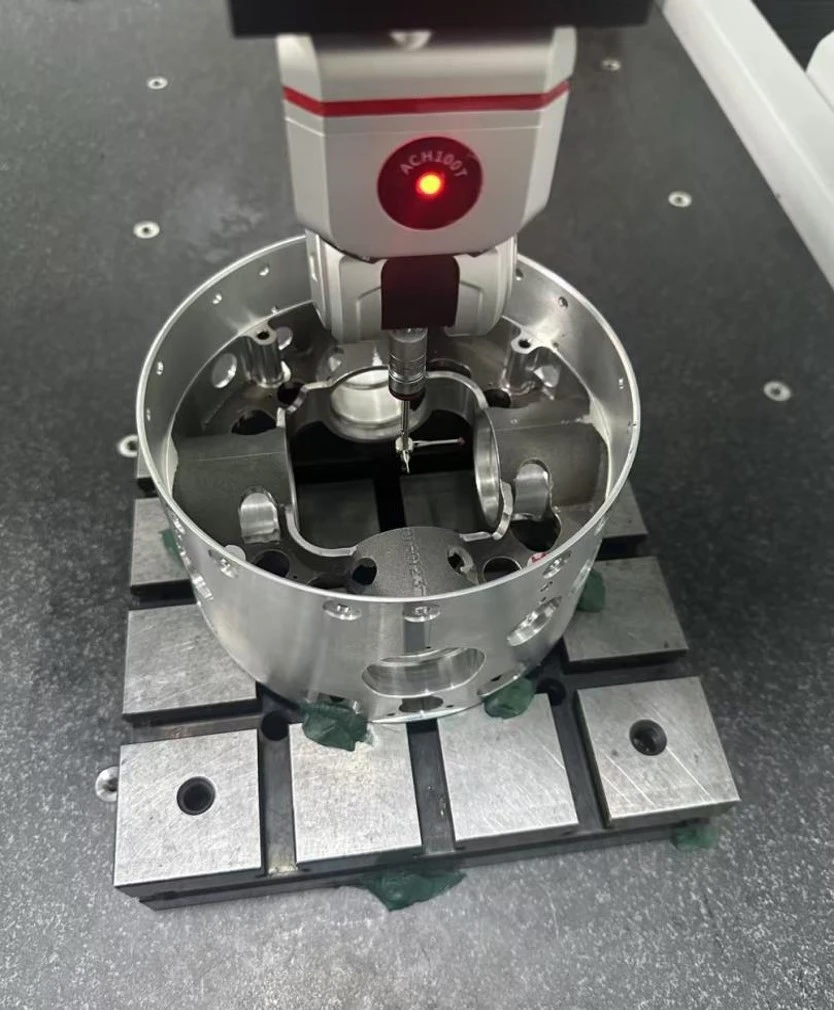
Quality inspection of the 3D dimensions and geometric tolerances of precision aviation components
Orthogonality and axis intersection accuracy of the mounting holes for the gyroscope on the mount
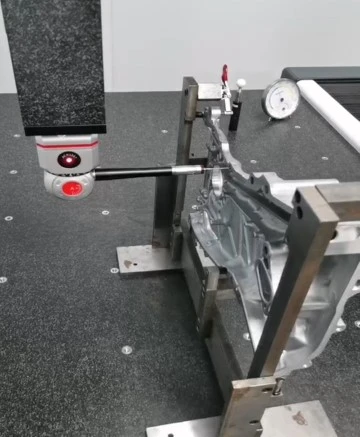
Inspection of the 3D dimensions and geometric tolerances of precision automotive parts
Conclusion
Maintaining long-term stability in Coordinate Measuring Machines (CMM) requires more than initial setup and calibration. Environmental control, preventive maintenance, regular verification, and skilled operation all play essential roles in sustaining measurement accuracy.
It is also important to recognize that gradual wear and performance variation are natural aspects of any precision system. Rather than indicating a limitation of the machine, these changes highlight the importance of proper maintenance and continuous monitoring.
By combining structured internal practices with appropriate expert support, organizations can ensure their Coordinate Measuring Machines (CMM) continue to deliver reliable, repeatable, and high-precision results throughout their operational lifespan.