
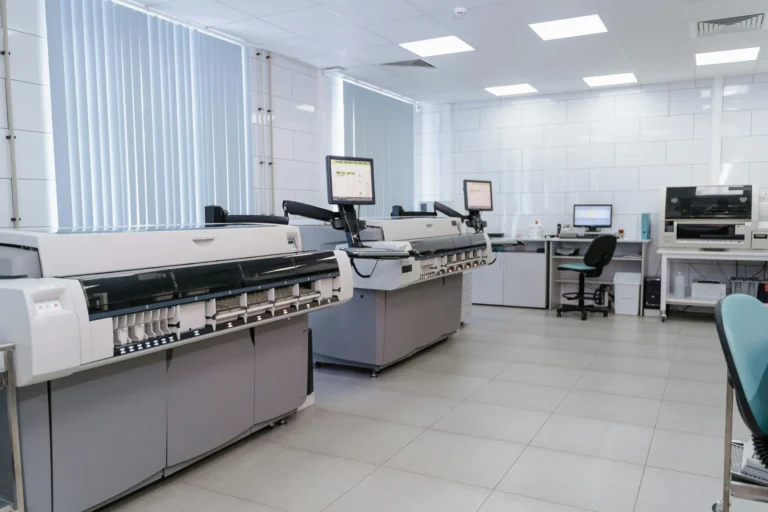
Precision measurement requires more than advanced equipment and skilled operation. The surrounding environment plays a critical role in ensuring that measurements are accurate, consistent, and repeatable. Even small variations in environmental conditions can introduce errors that affect the reliability of measurement results.
In precision measurement laboratories, environmental control is implemented to minimize external influences that may impact both the measuring instrument and the workpiece. By maintaining stable conditions, laboratories are able to achieve higher levels of accuracy and ensure that measurement data remains dependable across different inspection scenarios.
Why Environmental Control is Critical
Environmental control is a fundamental requirement in precision laboratories. Measurement accuracy is highly sensitive to environmental conditions, especially in applications involving tight tolerances. Factors such as temperature fluctuations, humidity changes, vibrations, and airflow variations can cause both the measuring system and the workpiece to expand, contract, or shift, leading to deviations in measured values.
For example, temperature variations can result in thermal expansion of materials, altering dimensions at a microscopic level. Vibrations from nearby machinery, foot traffic, or building movement can introduce instability during measurement. Uncontrolled airflow can create localized temperature differences, while excessive humidity can affect surface conditions or introduce condensation.
By controlling these factors, laboratories reduce measurement uncertainty and maintain consistent and reliable inspection results.
Key Environmental Factors
Environmental control in precision laboratories focuses on maintaining stable conditions across several key factors:
1. Temperature
Temperature is the most critical factor in precision measurement. Variations can cause both the workpiece and the measuring instrument to expand or contract, leading to dimensional changes that affect accuracy. Laboratories are typically maintained at a controlled reference temperature, commonly around 20 °C, with sufficient time allowed for stabilization before measurements are taken.
2. Humidity
Humidity affects measurement conditions by influencing material properties and environmental stability. High humidity levels can lead to condensation or surface degradation, while very low humidity may contribute to electrostatic effects that interfere with sensitive equipment. Maintaining a stable humidity range helps preserve both the integrity of the workpiece and the reliability of measurement systems.
3. Vibration
External vibrations, whether from machinery, foot traffic, or building movement, can significantly impact measurement accuracy. Precision laboratories often use vibration isolation systems, such as anti-vibration tables or dedicated foundations, to reduce external disturbances.
4. Airflow
Air currents from air-conditioning systems or open spaces can cause localized cooling or movement, affecting both the workpiece and measuring equipment. Proper laboratory design and controlled airflow help maintain a stable measurement environment and reduce unintended fluctuations.
Impact on Measurement Accuracy
Environmental factors have a direct and measurable effect on precision measurement. Even when advanced instruments and sophisticated measurement techniques are used, uncontrolled conditions can introduce errors that reduce repeatability and reliability.
- Temperature affects the physical dimensions of materials, potentially introducing deviations at the micron level.
- Vibration can shift equipment or workpieces during measurement, affecting positional accuracy.
- Airflow may create uneven thermal distribution, impacting sensitive measurements.
- Humidity can alter material surfaces or cause condensation, which may interfere with certain precision instruments.
Maintaining controlled environmental conditions is therefore essential to ensure that measurement results are consistent, repeatable, and trustworthy.
How Does This Apply to Video Measuring Systems (VMS) and Coordinate Measuring Machines (CMM)?
Curious how Video Measurement Systems (VMS) and Coordinate Measuring Machines (CMM) perform under different environmental conditions? Explore the answers below.
Conclusion
Environmental control is a crucial element in precision measurement. Factors such as temperature, humidity, vibration, and airflow can introduce variability that impacts the accuracy, repeatability, and reliability of measurements. By maintaining controlled conditions, laboratories reduce these sources of error, enabling instruments and workpieces to perform predictably and consistently. Ultimately, a well-controlled environment forms the foundation for achieving reliable and high-quality measurement outcomes.