
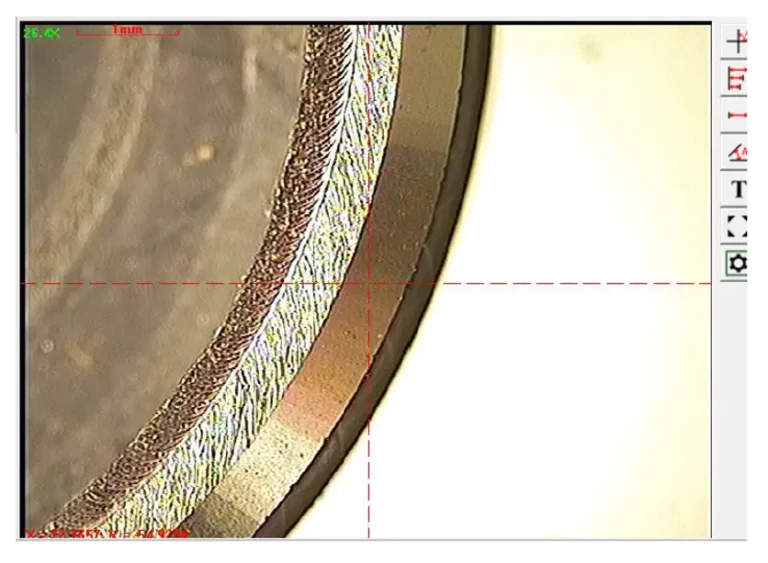
In Video Measurement Systems (VMS), measurement accuracy depends not only on optical resolution or system stability, but also on how precisely the system can identify the boundaries of a feature. This process, known as edge detection, is fundamental to determining dimensions such as lengths, diameters, and angles.
Unlike traditional contact measurement methods, the Video Measurement System (VMS) relies on image processing to interpret the geometry of a part. The system captures an image and analyzes the transition between light and dark regions to locate edges. The accuracy of this detection directly influences the reliability of the measurement results.
As measurement requirements become more demanding, especially in high-precision applications, the choice of edge detection technique plays an increasingly important role. Understanding how these techniques work provides insight into both the capabilities and limitations of Video Measurement System (VMS) measurements.
Edge detection in Video Measurement Systems (VMS) refers to the process of identifying the boundary between a part and its background within a captured image. This boundary is typically defined by a change in intensity, where pixels transition from light to dark or vice versa.
When a Video Measurement System (VMS) captures an image, it does not inherently “understand” shapes or dimensions. Instead, it processes pixel data to locate these transitions and determine the position of edges. Once edges are identified, the system can calculate distances, diameters, and geometric features based on their positions.
In practice, the clarity of these edges depends on factors such as lighting conditions, surface finish, and contrast between the part and the background. A well-defined edge allows for more accurate detection, while blurred or noisy edges can introduce uncertainty into the measurement.
Why Are There Different Edge Detection Methods?
At first glance, edge detection may seem straightforward. An edge appears wherever there is a visible contrast between light and dark regions. In a Video Measurement System (VMS), this contrast is typically created by controlled illumination, such as LED lighting, which enhances the boundary between the workpiece and its background.
However, in practice, edges are rarely perfectly defined. Instead of a sharp transition from bright to dark, most edges appear as a gradual change in intensity across several pixels. This raises an important question: where exactly should the edge be located? Should it be identified at the first sign of change, somewhere within the transition, or at the point where the intensity changes most rapidly?
Different edge detection methods exist because they answer this question in different ways. Some approaches prioritize speed and simplicity, while others focus on robustness or high precision. As a result, multiple techniques are used in a Video Measurement System (VMS) to interpret the same visual information and determine the most accurate edge position.
Therefore, while lighting creates the contrast necessary for edge detection, it is the underlying computational methods that determine how that contrast is translated into precise measurement data.
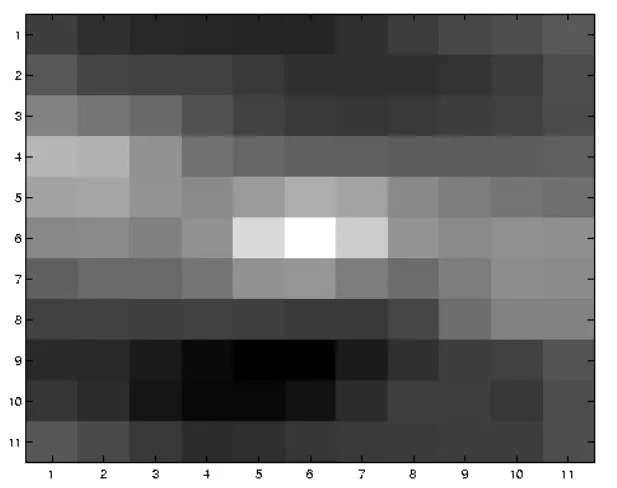
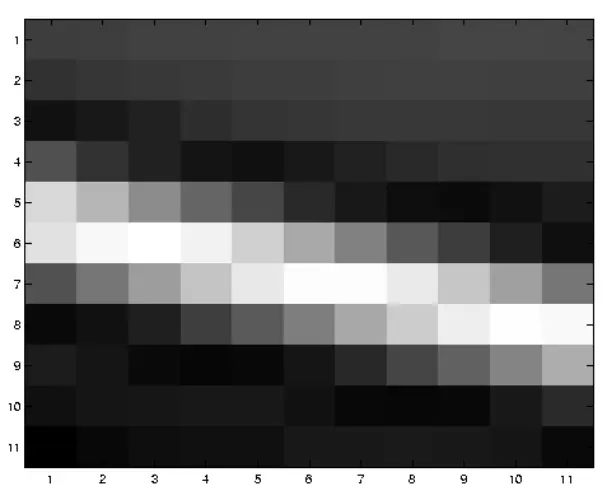
While edge detection in Video Measurement Systems (VMS) is fundamentally based on identifying the contrast between light and dark regions, different computational techniques are used to determine the exact position of the edge. The choice of technique affects measurement accuracy, especially in applications requiring high precision.
1. Threshold-Based Edge Detection
Threshold-based edge detection is one of the simplest and most intuitive methods. In this approach, a predefined intensity value or threshold is used to distinguish between the object and the background. When the pixel intensity crosses this threshold, the system identifies that position as an edge.
This method is fast and effective when there is strong contrast between the workpiece and the background. However, its accuracy can be affected by variations in lighting, surface reflectivity, or noise, making it less reliable for high-precision measurements.
2. Gradient-Based Edge Detection
Gradient-based edge detection improves upon the threshold method by analyzing how rapidly the image intensity changes across pixels. Instead of relying on a fixed value, the system identifies edges at locations where the change in brightness is the steepest. This approach is more robust under varying lighting conditions and provides more consistent results when edges are not sharply defined.
3. Sub-Pixel Edge Detection
For high-precision measurements, Video Measurement Systems (VMS) often employ sub-pixel edge detection techniques. Unlike basic methods that locate edges at discrete pixel positions, sub-pixel techniques estimate the edge location between pixels using mathematical interpolation.
This allows the system to determine edge positions with a resolution finer than a single pixel, significantly improving measurement accuracy. Sub-pixel edge detection is particularly important in applications where even micron-level deviations are critical.
The accuracy of edge detection in Video Measurement Systems (VMS) is not determined by algorithms alone. Several external and physical factors influence how clearly an edge can be identified, ultimately affecting measurement reliability.
One of the most critical factors is lighting. Proper illumination enhances the contrast between the workpiece and the background, making edges easier to detect. Different lighting techniques, such as backlighting or coaxial lighting, are often used depending on the geometry and surface characteristics of the part. Poor or inconsistent lighting can result in blurred or indistinct edges, reducing detection accuracy.
Contrast between the feature and its surroundings also plays a significant role. High contrast allows the system to distinguish edges more clearly, while low contrast can make edge transitions gradual and difficult to define. This is especially challenging when measuring transparent, reflective, or similarly colored materials.
The surface condition of the workpiece further affects edge detection. Rough surfaces, scratches, or reflective finishes can scatter light unpredictably, introducing noise into the captured image. This can make it more difficult for the system to accurately determine the true edge position.
Finally, image noise and system resolution influence the precision of edge detection. Noise from the camera sensor or environmental factors can obscure edge transitions, while limited resolution restricts how finely edges can be identified. Although sub-pixel techniques help overcome resolution limits, excessive noise can still degrade accuracy.
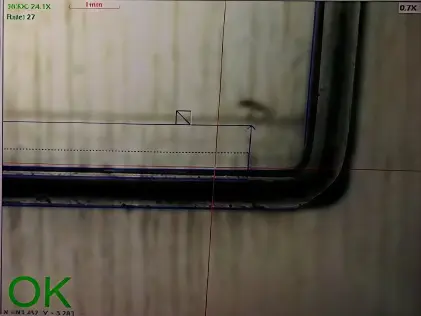
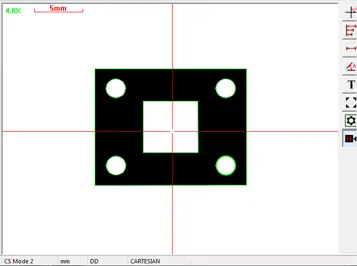
Achieving reliable edge detection is not solely dependent on algorithms, but also on the overall design and integration of the measurement system. Factors such as optical quality, lighting control, and system stability all contribute to how effectively edges can be identified and measured.
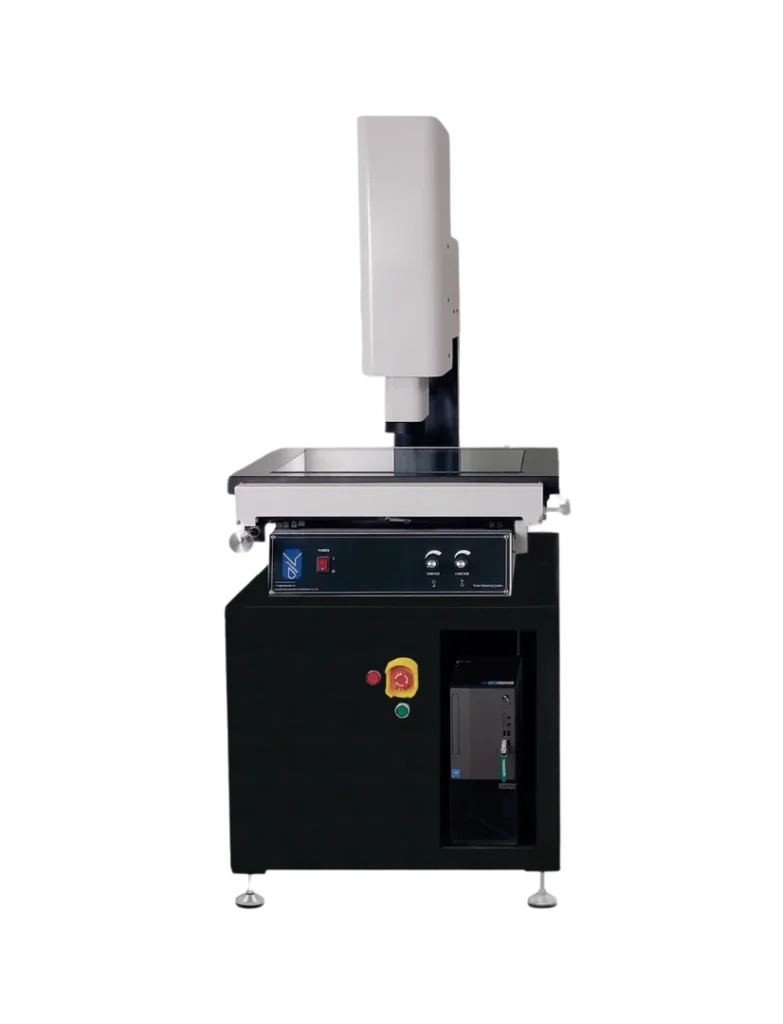
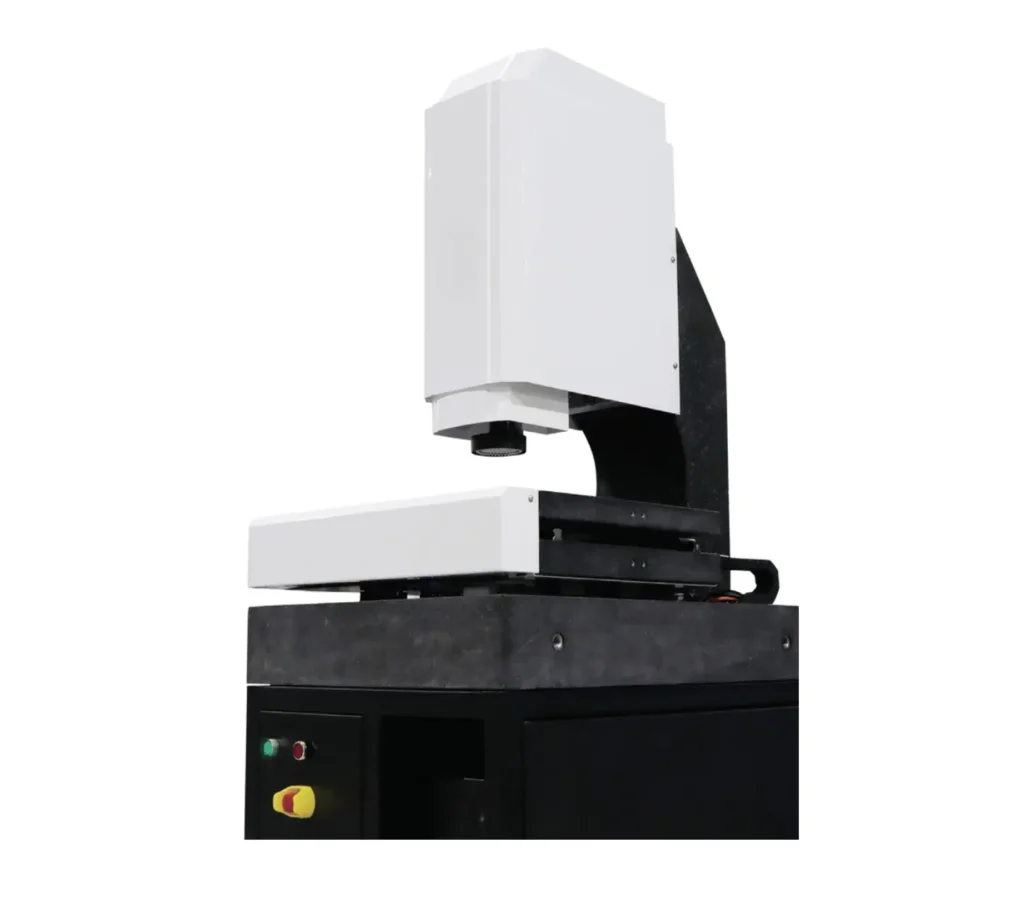
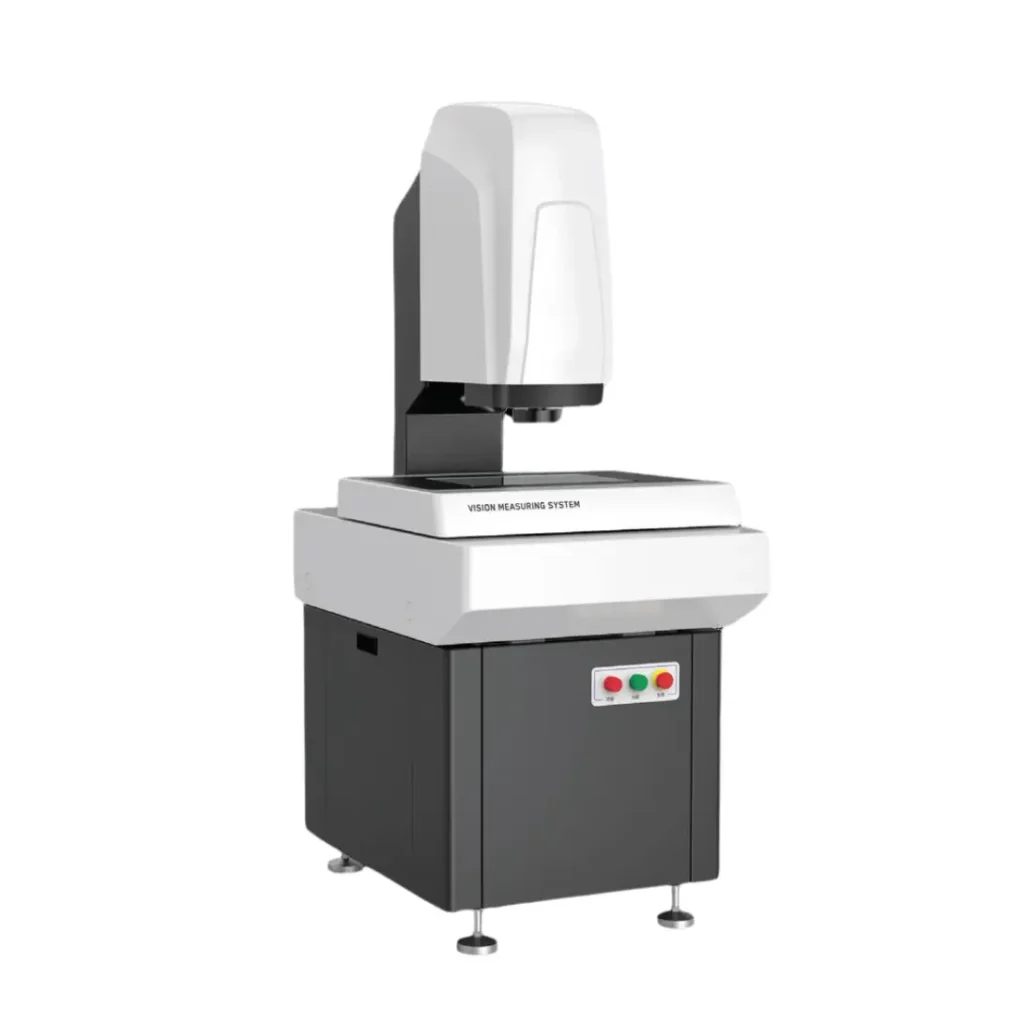
Hansvue offers a range of Video Measurement Systems (VMS) equipped with features commonly used in precision measurement applications. These include high-resolution imaging, controlled illumination, and automatic edge detection functions, which support efficient and repeatable measurement processes across different inspection tasks. This flexibility allows users to select a system configuration that best matches their measurement requirements, supporting both simple inspections and more demanding applications.
By integrating these capabilities, Video Measurement Systems (VMS) are able to provide clear edge definition and consistent detection results across a wide range of applications, particularly in environments where measurement reliability is essential.
Conclusion
Edge detection is a fundamental process in Video Measurement Systems (VMS), forming the basis of accurate and reliable dimensional measurement. While it may appear as a simple identification of boundaries, the process involves a combination of detection techniques, from basic contrast identification to advanced sub-pixel refinement.
However, the effectiveness of edge detection is not determined by algorithms alone. Factors such as lighting conditions, surface characteristics, image quality, and system stability all play a critical role in how clearly an edge can be defined. Without proper control of these variables, even the most advanced detection methods may struggle to deliver consistent results
As a result, achieving high measurement accuracy requires a balanced integration of technology and application awareness. By combining robust system design with an understanding of real-world influences, Video Measurement Systems (VMS) are able to provide precise, repeatable, and dependable measurements across a wide range of inspection needs.