Understanding Measurement Uncertainty in Video Measurement System (VMS) Inspection
When inspecting a precision component, the measured dimension is often treated as an exact value. In reality, every measurement carries a degree of uncertainty that must be considered when determining whether a part truly meets its tolerance requirements. Understanding measurement uncertainty is therefore essential for reliable dimensional inspection.
This article explores the concept of measurement uncertainty and examines how it applies to Video Measurement Systems (VMS). Understanding measurement uncertainty allows engineers and quality inspectors to interpret measurement results more reliably and determine whether a component truly meets its design specifications.
What is Measurement Uncertainty?
Measurement uncertainty describes the range within which the true value of a measured dimension is expected to lie.
For example, if a diameter measurement is reported as:
20.000 mm ± 0.005 mm
the actual dimension is expected to fall between 19.995 mm and 20.005 mm.
Measurement uncertainty quantifies the level of confidence in the measurement result. The concept is formally described in the Guide to the Expression of Uncertainty in Measurement (GUM) developed by the International Organization for Standardization (ISO) and other international metrology bodies.
Accuracy, Precision, and Measurement Uncertainty
Measurement uncertainty is closely related to the concepts of accuracy and precision, which describe how measurement results behave relative to the true value and to each other.
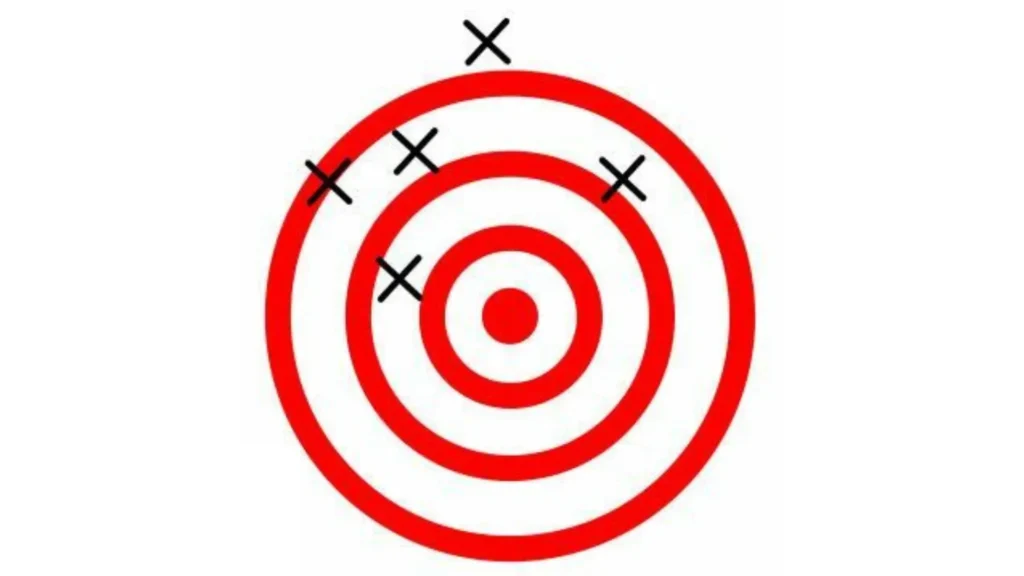
The dartboard analogy provides a simple way to visualize measurement performance. The dartboard’s bullseye represents the true value of a dimension, while each dart represents an individual measurement result. The different dart patterns demonstrate how measurement results can vary depending on the accuracy and precision of the measurement system.
low accuracy and high precision
high accuracy and low precision
low accuracy and low precision
high accuracy and high precision
A tight cluster of darts at the bullseye represents measurements that are both highly accurate and highly precise. When darts are spread out but centered around the bullseye, the measurements are accurate on average but lack precision due to greater variation between individual results. In contrast, a tight cluster of darts located away from the bullseye indicates high precision but low accuracy, as the measurements are consistent but deviate from the true value. When darts are both scattered and far from the center, the measurements exhibit both low accuracy and low precision.
Measurement uncertainty reflects the expected spread of measurement results, defining the range within which the true value of a dimension is likely to lie.
Common Sources of Measurement Uncertainty
In practical inspection environments, measurement uncertainty arises from several sources throughout the measurement process. These sources generally fall into four categories: the measurement instrument itself, environmental conditions, characteristics of the workpiece, and operator influence. Factors such as instrument resolution, calibration accuracy, temperature fluctuations, surface properties of the part, and measurement strategy can all introduce variation in measurement results. Because these influences are unavoidable to some degree, understanding and managing them is essential for achieving reliable dimensional inspection with systems such as the Video Measurement System (VMS).
Measurement uncertainty reflects the expected spread of measurement results, defining the range within which the true value of a dimension is likely to lie.
Video Measurement Systems (VMS) rely on optical imaging and digital analysis to determine dimensional features. Through high-magnification images and edge identification, fast and non-contact inspection are enabled. There are several factors that contribute to measurement uncertainty in optical systems.
1. Image Resolution
Camera sensors capture images as discrete pixels, and the measurement software converts the detected pixel positions into physical measurement coordinates. This process allows dimensional features observed in the image to be translated into measurable distances within the system’s coordinate framework. Higher image resolution generally improves the ability to detect small dimensional changes by providing more detailed image information. However, because the measurement ultimately depends on converting pixel-based image data into physical dimensions, a small degree of uncertainty is inherently introduced during this conversion process.
2. Edge Detection and Image Quality
Video Measurement Systems (VMS) rely on software algorithms to determine the position of feature boundaries within captured images. Because measurements are derived from the detected edge location, any uncertainty in identifying the exact boundary directly affects the resulting dimensional measurement. The reliability of edge detection depends heavily on image quality, which can be influenced by factors such as lighting direction, surface reflectivity, image contrast, and the sharpness of the observed edge. Poor illumination or highly reflective surfaces may produce blurred or ambiguous edges, making it more difficult for the software to determine the precise boundary and thereby increasing measurement uncertainty.
3. Stage Motion Accuracy
In many Video Measurement Systems (VMS), the workpiece is moved along precision linear guideways while encoders monitor the stage position during measurement. Any deviation in stage movement, such as slight positioning errors, mechanical vibration, or guideway misalignment, can influence the reported measurement coordinates. Although high-precision encoders and calibrated motion systems greatly reduce these effects, small positional variations can still contribute to the overall measurement uncertainty.
Managing Measurement Uncertainty in Practical Inspection
Although multiple factors contribute to measurement uncertainty, Video Measurement Systems (VMS) are designed to control these influences through careful mechanical design, optical calibration, and advanced image processing algorithms. Precision motion stages, high-resolution imaging systems, and stable machine structures work together to ensure that measurement variation remains extremely small. In practical applications, the resulting measurement uncertainty is typically within a few microns, allowing reliable inspection of precision components used in electronics, medical devices, and precision manufacturing.
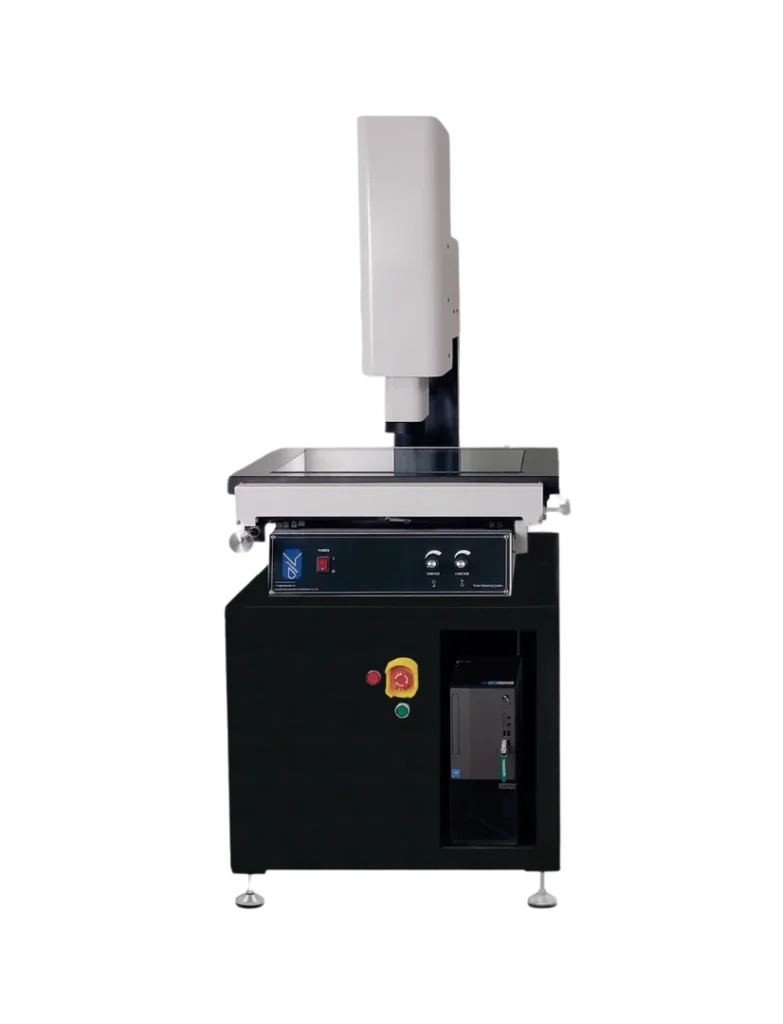
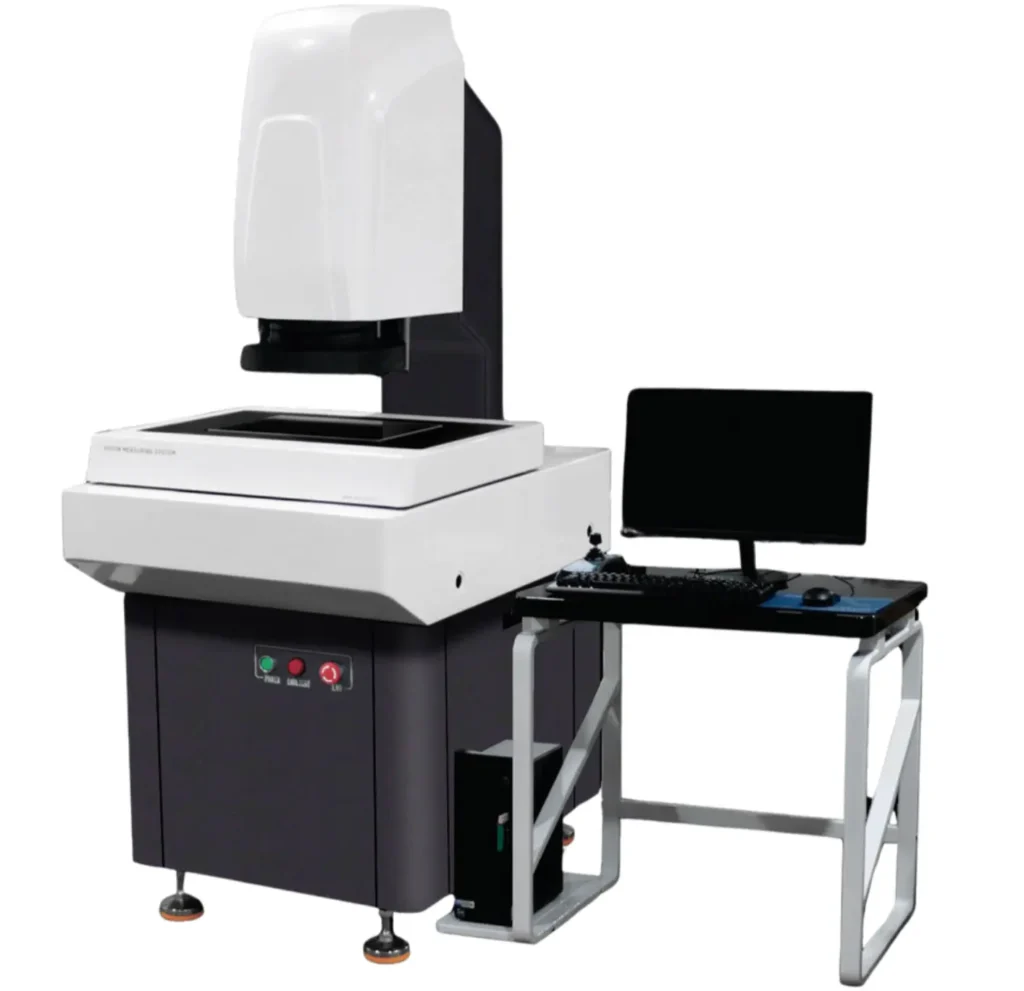
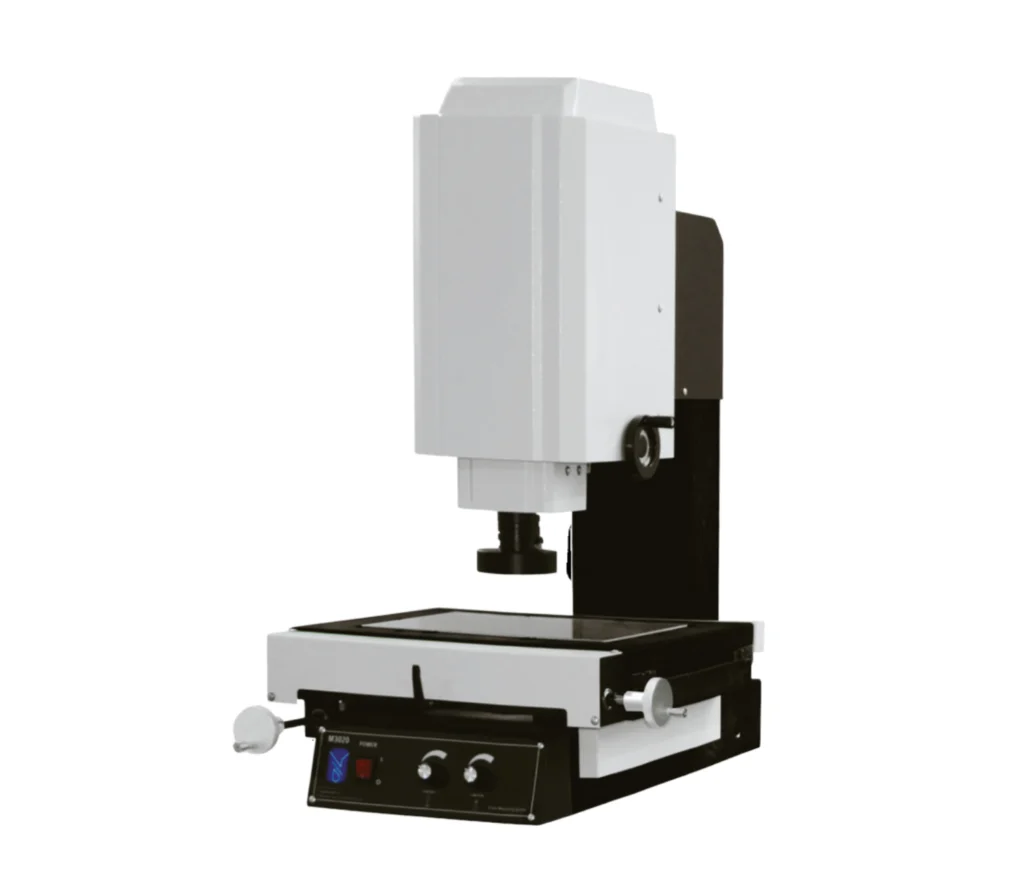
By combining high-resolution optical imaging, precision linear guideways, and micron-level encoder feedback, Hansvue’s Video Measurement Systems (VMS) are capable of achieving measurement uncertainties in the micrometer range. For many inspection tasks, this level of uncertainty is significantly smaller than the dimensional tolerances specified for manufactured components, ensuring that measurement results remain reliable for quality control and process verification.
Arc Series (Semi Auto Video Measurement System)
Elite Series (Gantry Video Measurement System)
Hexa Series (Manual Video Measurement Machine)
Nimbus Series (Fully Automatic Video Measurement System)
Spectra Series (High Accuracy Video Measurement Machine)
Ultris Series (Flash Measurement, 100 measurement in 3 seconds)
Velox Series (One Touch, Flash Measurement, IDMS)
Conclusion
Measurement uncertainty is an inherent part of any dimensional inspection process. Rather than representing an error in measurement, it reflects the natural limits of measurement systems and the influence of factors such as imaging resolution, edge detection performance, and mechanical positioning accuracy.
In modern optical inspection systems such as the Video Measurement System (VMS), these sources of uncertainty are carefully controlled through precision mechanical design, calibrated optics, and advanced image processing techniques. When properly calibrated and operated under stable environmental conditions, the resulting measurement uncertainty is typically maintained within the micrometer range.
For many manufacturing applications, this level of measurement capability is significantly smaller than the dimensional tolerances required for product quality. As a result, Video Measurement Systems (VMS) are reliable and efficient for non-contact dimensional inspection across industries such as electronics, precision machining, and medical device manufacturing.
By understanding the factors that influence measurement uncertainty, engineers and quality inspectors can interpret measurement results with greater confidence and ensure that inspection data accurately reflects the true condition of the inspected component.