
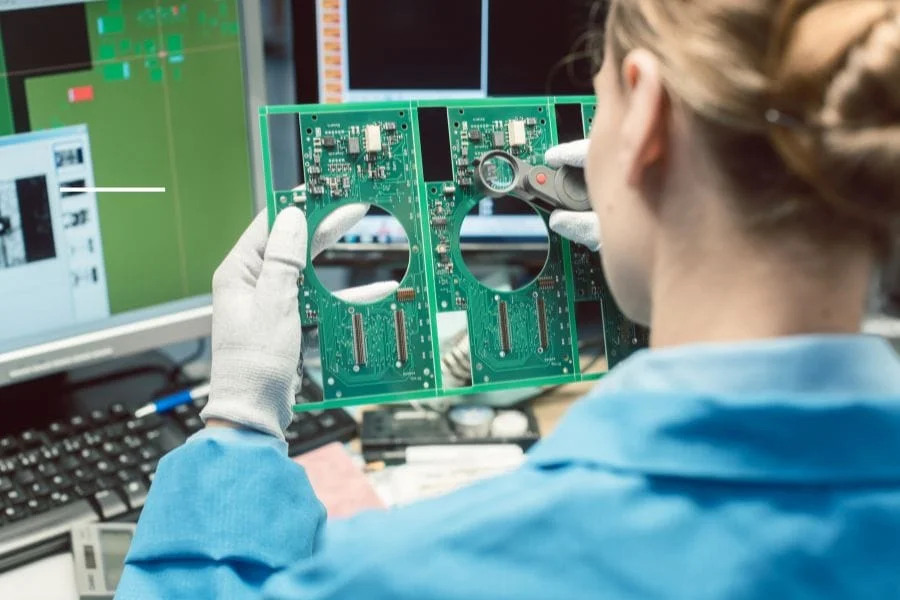
In the rapidly advancing world of electronics manufacturing, every micron matters. From high-speed processors to automotive sensors, even the smallest dimensional error or hidden defect can lead to product malfunction, data loss, or safety hazards. That’s why precision measurement has become the foundation of quality control (QC) ensuring every part, circuit, and assembly performs exactly as intended.
Modern electronics are smaller, faster, and more complex than ever before. Traditional manual inspection methods can no longer meet the accuracy or speed required. Instead, manufacturers now rely on advanced, non-contact, and automated precision measurement systems such as Video Measuring Systems (VMS), X-ray inspection, 3D digital microscopes, and laser profilometers. These systems not only detect microscopic defects but also provide real-time process data that drives continuous improvement and compliance with international standards.
1.Why Quality Control Matters in Electronics Manufacturing
The electronics industry is built on precision. Every resistor, microchip, and solder joint must function under strict tolerance levels. A single manufacturing error like a misaligned pin or weak solder connection can cause a chain reaction of failures, from device overheating to total system breakdown.
Effective quality control ensures:
Stable and reliable product performance under all operating conditions
Compliance with global standards such as ISO 9001, IPC-A-610, and JEDEC
Reduced waste and rework, saving time and production costs
Enhanced brand reputation through consistent, defect-free products
In a competitive global market, advanced QC processes are essential for maintaining high standards, reducing production risks, and ensuring long-term reliability.
2.Common Challenges in Electronics Quality Control
Electronics manufacturing today faces several precision and process challenges that make traditional QC methods insufficient:
Miniaturization: Components are now measured in microns, not millimeters, making manual inspection impossible.
Complex Assemblies: Multilayer PCBs and advanced packaging hide many internal features that are not visible to the naked eye.
High Production Speed: Automated lines produce thousands of parts per hour, requiring equally fast inspection systems.
Non-contact requirements: Sensitive microchips and boards cannot be physically touched during measurement.
Data Traceability: Manufacturers need measurable, traceable results for every production batch.
To overcome these issues, electronics manufacturers have turned to precision metrology and automated inspection systems.
3.Precision Measurement Tools Used in Electronics QC
Different precision tools address different inspection needs across the production line. The combination of these technologies allows for complete dimensional and functional verification.
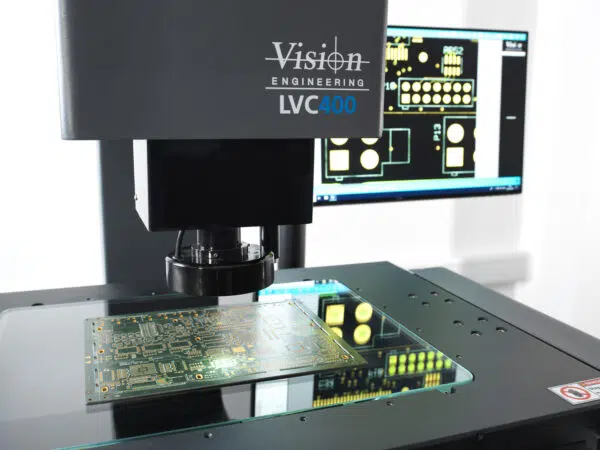
a. Video Measuring Systems (VMS)
A VMS uses optics, digital cameras, and software algorithms to capture accurate, non-contact measurements. It’s ideal for small mechanical or electronic parts where precision and speed are critical.
Applications:
Measuring PCB hole positions, pad spacing, and solder joint dimensions
Checking connector geometry and lead alignment
Verifying the dimensions of semiconductor parts
VMS ensures repeatable accuracy and supports data export to CAD or SPC systems for quality tracking.
b. X-Ray Inspection
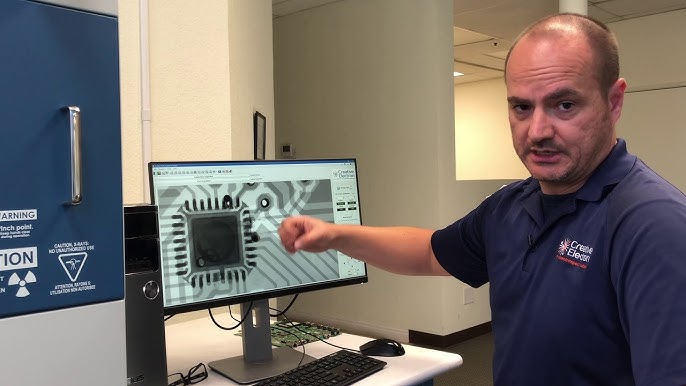
X-ray inspection systems provide internal visualization of electronic assemblies without physical damage.
Applications:
Detecting voids, cracks, or bridges in solder joints (BGA, QFN, CSP)
Inspecting multilayer PCBs and chip packaging
Verifying wire bond connections and component placement
By identifying internal defects invisible to optical systems, X-ray inspection ensures structural reliability and compliance with IPC standards.
c. 3D Microscopes and Digital Profilers
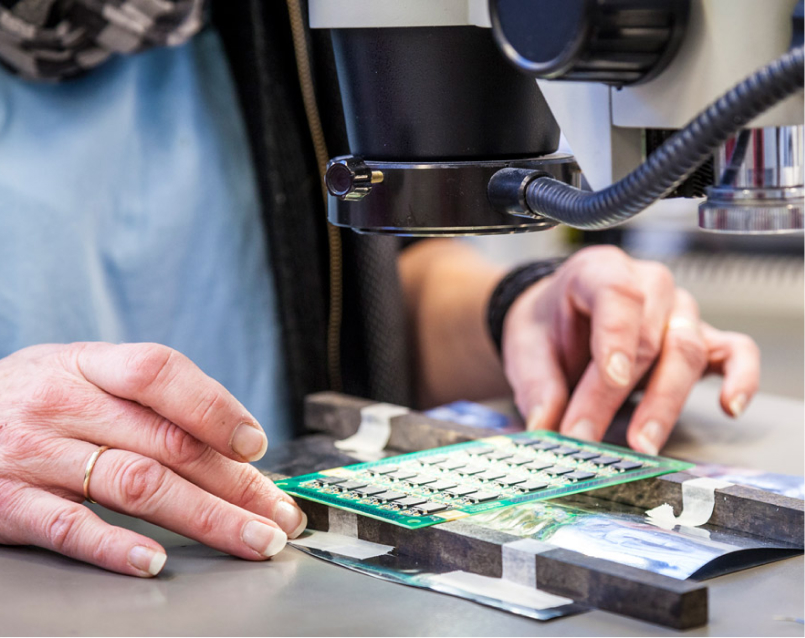
3D digital microscopes capture surface topography and enable detailed analysis of surface texture, height, and coating thickness.
Applications:
Detecting surface contamination, solder splashes, or oxidation
Inspecting micro-welds and bonding interfaces
Evaluating failed or returned products (failure analysis)
d. Laser and Optical Profilometers
Laser-based profilometers measure surface profiles at high speed and precision. They’re often integrated inline for real-time process control.
Applications:
Measuring coating thickness and adhesive volume
Ensuring flatness and uniformity of wafer or chip surfaces
Together, these tools form a multi-layered QC system capable of detecting both external and internal flaws with sub-micron accuracy.
4. Benefits of Precision Measurement in Electronics Quality Control
Adopting precision measurement systems brings measurable benefits throughout the manufacturing process:
Higher product reliability: Detects defects early before assembly completion
Reduced rework and scrap: Prevents wasted material and production time
Consistent dimensional control: Maintains tolerance limits across all batches
Faster inspection cycles: Automation improves throughput without compromising accuracy
Digital documentation: Provides traceable measurement records for audits and certification
By shifting from reactive to proactive quality control, precision measurement helps manufacturers move toward zero-defect production.
5. Integration of Data and Smart Quality Systems
Today’s precision measurement devices are not isolated tools. They integrate into Quality Management Systems (QMS) and Manufacturing Execution Systems (MES) to form connected, data-driven production lines.
Key benefits include:
Centralized data storage for easier reporting and analysis
Real-time feedback for immediate process correction
Trend tracking for predictive quality improvement
Compatibility with Industry 4.0 standards for smart factories
This integration turns raw measurement data into actionable insights that help engineers improve both product and process performance.
6. Real-World Applications in Electronics Manufacturing
Precision measurement technologies are used at multiple stages of the electronics production chain:
PCB Fabrication: VMS ensures copper trace width and pad alignment.
Solder Paste Inspection: 3D profilers verify volume and thickness of solder paste before reflow.
Assembly Inspection: X-ray detects internal defects in complex assemblies.
Final Product QC: Microscopes check for cosmetic and structural defects.
In Malaysia and across Asia, major electronics manufacturers are adopting these systems to meet the growing demand for high-speed, high-reliability devices.
7. Future of Precision Measurement in Electronics QC
As electronics continue to shrink in size but grow in complexity, the future of QC will rely on even more advanced and automated systems.
Emerging trends include:
AI-assisted defect detection: Artificial intelligence can identify defect patterns and predict potential process failures.
Hybrid inspection: Combining optical, laser, and X-ray systems for full 3D analysis.
Cloud-based quality databases: Centralized data sharing across multiple factories.
Digital twins: Using measurement data to simulate and optimize product design before manufacturing.
The integration of AI and precision metrology will allow manufacturers to detect, analyze, and correct issues faster than ever before leading to higher yields and stronger reliability.
Conclusion
Precision measurement is no longer just an inspection step it is the backbone of modern electronics quality control. From optical VMS to 3D microscopy and X-ray inspection, these technologies ensure every part of a device meets the strictest design and reliability standards.
By combining automation, non-contact inspection, and intelligent data analysis, manufacturers can eliminate hidden defects, boost consistency, and improve production efficiency.
In an industry where performance and reliability define success, precision measurement remains the key to achieving flawless electronics manufacturing ensuring that innovation continues without compromise.